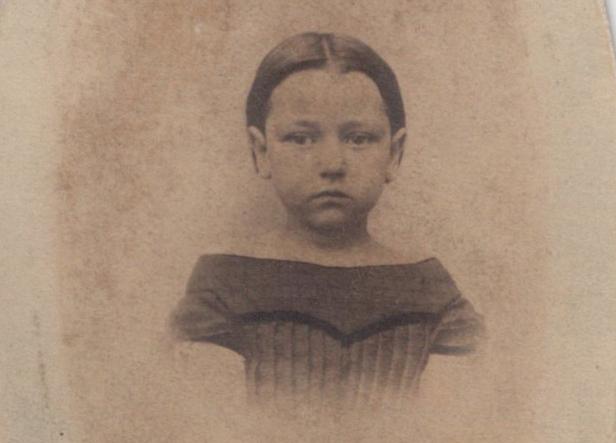
Trauma.
I write a lot about trauma, especially indirectly, because learning to understand and heal from it is my life-long journey. In fact, it seems to be at the core of many people’s life-long journeys. My partner only very recently found out that his grandfather, whom he lived with as a child, was a prisoner of war for a few years in the mid-to-late 40’s. How that may have affected his father, him, and our children is really unknown, but there are some hints. And my story is full of these hints too.
Why hints? Because none of our parents really talk about their own or their parents’ traumas. We’ve grown up guessing and wondering, and often hearing tiny pieces from aunts, uncles, and distant cousins. I think that our parents’ silence is perhaps part trauma response, and partly their way of protecting us. All valid, but now we know that dealing with the trauma is an important part of healing from it, and so for our own and our children’s sake, we’re slowly picking it apart.
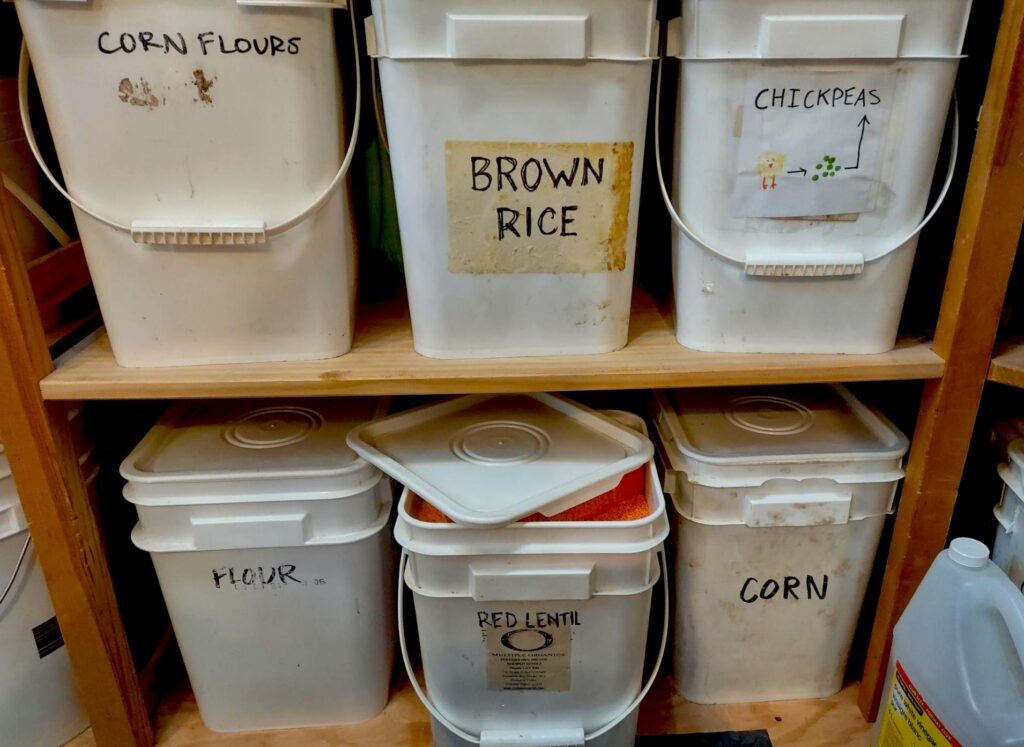
Look at these buckets of food. I live in a 2-person household. I do cook all our food, but some of these take years to go through, and they did even when we still had two hungry teens living at home. So am I a prepper? A hoarder? Just plain crazy? Maybe all of the above, but also, I’m the product of my grandparents. I had six grandparents. Let me tell you about them. I only have a few bare facts, gathered from sparse partial stories of parents, aunts and uncles, but combined, they explain a lot.
My birth father’s mother was born to Ukrainian war refugees, trying to survive in the Canadian Rockies, during the many global hardships of the early twentieth century. By the time she had her own kids with her Irish refugee husband, in the late forties and early fifties, she had developed a knack for hoarding all kinds of things. When she died, she had so many bottles of hair-set; so many folded pink towels; so many, so many of all kinds of things. I have this tendency, as well. What if I might run out of something?!
My other father’s mother had her first baby, my aunt, during the Dutch hunger winter of the second world war. She told me that she had to sneak into neighbours’ fields at night to steal tulip bulbs to keep herself, my grandfather, and my infant aunt alive. There was so little to eat, but she saved the can of cocoa she’d had before the war like it was a beacon of hope. When I was a kid in the eighties, that pre-war cocoa still sat on our fridge. The ancient cocoa is gone now, but I buy cocoa in large quantities and store it in that can.
My mother’s mother lived through the great depression as a teen and young adult, in South Dakota. Her future husband, my grandfather, lost his family ranch around the same time. Then just when she was learning to cook and care for her growing family, and began moving about to various states, following her husband’s engineering career, the Dust Bowl arrived, and so did the second world war, albeit not in mainland America. My grandpa departed to do his bit for the war, and she was left to feed her youngest children, alone. There’s quite a bit of resentment in my family, I think, about some of her apparent coping mechanisms, but she did raise five children, and so did my grandfather, and now, here I am nearly a hundred years later buying twenty-pound bags of grain, because I just think that’s normal.
I imagine almost everyone in the world is at most a fifth-generation survivor of existential mass crisis. All of us are carrying some kind of trauma and surviving due to coping mechanisms that may also be detrimental to us. How many of our medical conditions, especially autoimmune, are due to our intergenerational traumas? What kind of species suffers endlessly from the effects of war, environmental devastation (by our own hand) and other selfish acts, and then, in blind trauma-induced ignorance, rage, narcissism or whatever, repeats the same acts every few generations?! Well… humans, apparently.
Thinking about how difficult it’s been for me to get even the vaguest handle on what’s happened in my own family, I have asked myself often why my parents don’t talk about these things. I see their own challenges and don’t want to make them worse. I can absolutely understand why not talking about it has been an effective coping mechanism for so many; how triggering the painful memories is not an option, and even how our parents protected us from these histories, intentionally. I also understand how necessary it is to start talking, though. I understand how the protection our parents gave us also became an empty hole where our own coping mechanisms could grow unfettered into addictions, isolation, and self-hatred, because we didn’t know where they came from, and couldn’t address them.
Connection is the cure for trauma. Yes, this likely means talking with therapists and others who can help us navigate the potholes and hills on our road. But it also just means loving. It means being open and honest and vulnerable; teaching ourselves to trust, again; to see others as *like us* instead of foreign. It means slowly working through our joys and challenges in community, so that we can learn, collectively, to build a society that we won’t need generations to heal from.
When I sit with my friends or my partner and talk about the things we don’t know; the fears we have for our children and our parents; for our future selves, and we dream up solutions in the form of utopias that almost seem possible… we’re healing. But more importantly, we’re loving. We're actively building that society where healing comes free with our first breath, and the love-founded voices of our parents coo, “welcome to the world, little one; we’re on this ride with you.”
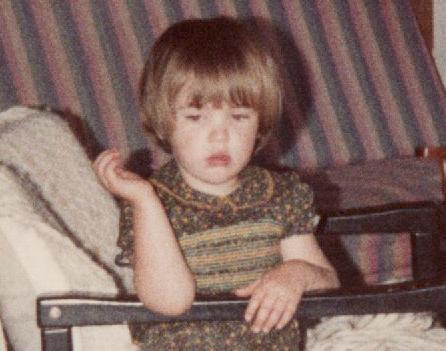
“If intergenerational trauma can alter DNA, why can’t intergenerational love?”
― Alicia Elliott, A Mind Spread Out on the Ground