How Can We Heal from Trauma as a Society?

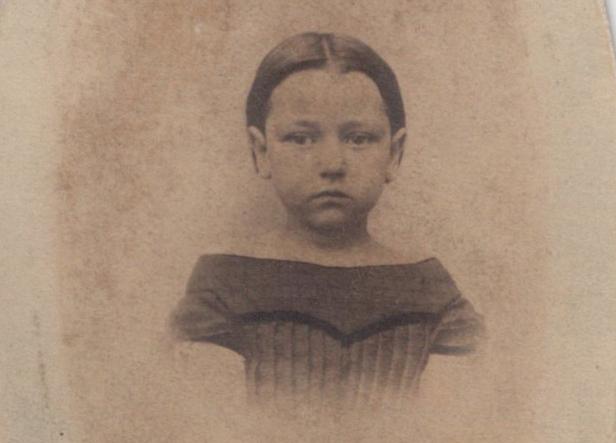
My great great grandmother, Isabella Low Post, around 1863. She's wearing a tailored child's dress, and her straight brown hair is pulled back from her face. She is looking downwards to her right, her mouth closed in a sullen frown. It's a posed portrait, with much fading and brown staining over the child and the white background.
Isabella Post, my great great grandmother, in 1863.

Trauma.

I write a lot about trauma, especially indirectly, because learning to understand and heal from it is my life-long journey. In fact, it seems to be at the core of many people’s life-long journeys. My partner only very recently found out that his grandfather, whom he lived with as a child, was a prisoner of war for a few years in the mid-to-late 40’s. How that may have affected his father, him, and our children is really unknown, but there are some hints. And my story is full of these hints too.

Why hints? Because none of our parents really talk about their own or their parents’ traumas. We’ve grown up guessing and wondering, and often hearing tiny pieces from aunts, uncles, and distant cousins. I think that our parents’ silence is perhaps part trauma response, and partly their way of protecting us. All valid, but now we know that dealing with the trauma is an important part of healing from it, and so for our own and our children’s sake, we’re slowly picking it apart.
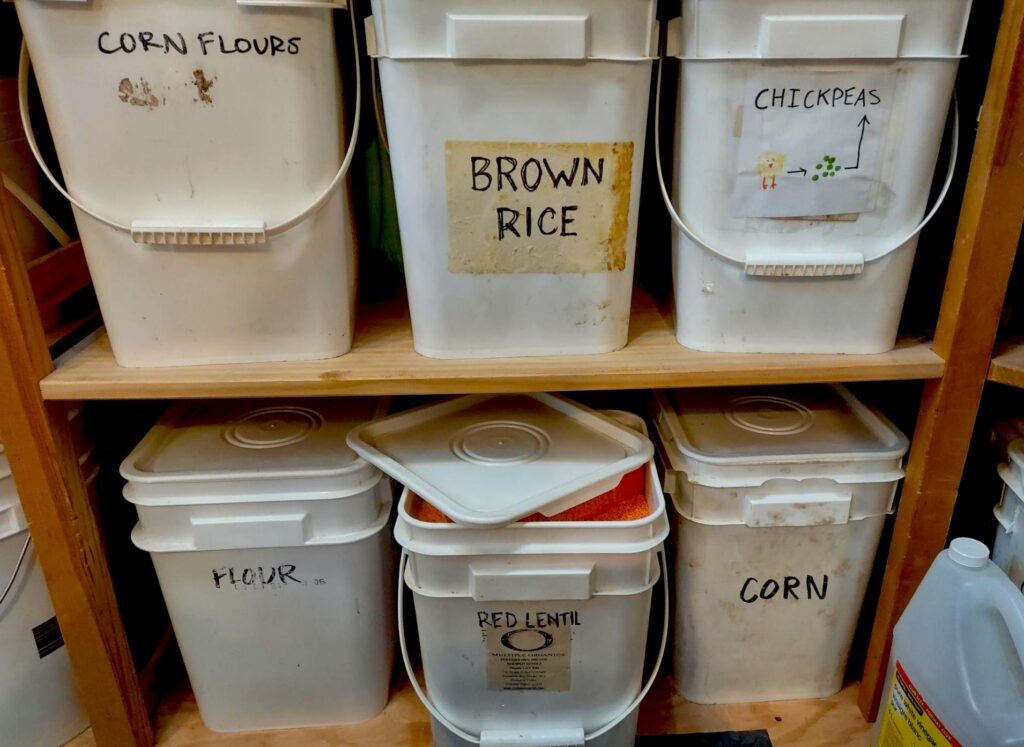
Six large plastic buckets sitting on the floor and a shelf directly above. They have labels on them written in sharpie pen that say: Corn flours, brown rice, chickpeas, flour, rend lentil, and corn. The red lentil bucket is sitting open and red lentils can be seen inside, nearly filling the bucket. A large plastic jug of white vinegar sits to the right of the buckets, on the plywood floor.
My grain buckets. 2026.

Look at these buckets of food. I live in a 2-person household. I do cook all our food, but some of these take years to go through, and they did even when we still had two hungry teens living at home. So am I a prepper? A hoarder? Just plain crazy? Maybe all of the above, but also, I’m the product of my grandparents. I had six grandparents. Let me tell you about them. I only have a few bare facts, gathered from sparse partial stories of parents, aunts and uncles, but combined, they explain a lot.

My birth father’s mother was born to Ukrainian war refugees, trying to survive in the Canadian Rockies, during the many global hardships of the early twentieth century. By the time she had her own kids with her Irish refugee husband, in the late forties and early fifties, she had developed a knack for hoarding all kinds of things. When she died, she had so many bottles of hair-set; so many folded pink towels; so many, so many of all kinds of things. I have this tendency, as well. What if I might run out of something?!

My other father’s mother had her first baby, my aunt, during the Dutch hunger winter of the second world war. She told me that she had to sneak into neighbours’ fields at night to steal tulip bulbs to keep herself, my grandfather, and my infant aunt alive. There was so little to eat, but she saved the can of cocoa she’d had before the war like it was a beacon of hope. When I was a kid in the eighties, that pre-war cocoa still sat on our fridge. The ancient cocoa is gone now, but I buy cocoa in large quantities and store it in that can.

My mother’s mother lived through the great depression as a teen and young adult, in South Dakota. Her future husband, my grandfather, lost his family ranch around the same time. Then just when she was learning to cook and care for her growing family, and began moving about to various states, following her husband’s engineering career, the Dust Bowl arrived, and so did the second world war, albeit not in mainland America. My grandpa departed to do his bit for the war, and she was left to feed her youngest children, alone. There’s quite a bit of resentment in my family, I think, about some of her apparent coping mechanisms, but she did raise five children, and so did my grandfather, and now, here I am nearly a hundred years later buying twenty-pound bags of grain, because I just think that’s normal.

I imagine almost everyone in the world is at most a fifth-generation survivor of existential mass crisis. All of us are carrying some kind of trauma and surviving due to coping mechanisms that may also be detrimental to us. How many of our medical conditions, especially autoimmune, are due to our intergenerational traumas? What kind of species suffers endlessly from the effects of war, environmental devastation (by our own hand) and other selfish acts, and then, in blind trauma-induced ignorance, rage, narcissism or whatever, repeats the same acts every few generations?! Well… humans, apparently.

Thinking about how difficult it’s been for me to get even the vaguest handle on what’s happened in my own family, I have asked myself often why my parents don’t talk about these things. I see their own challenges and don’t want to make them worse. I can absolutely understand why not talking about it has been an effective coping mechanism for so many; how triggering the painful memories is not an option, and even how our parents protected us from these histories, intentionally. I also understand how necessary it is to start talking, though. I understand how the protection our parents gave us also became an empty hole where our own coping mechanisms could grow unfettered into addictions, isolation, and self-hatred, because we didn’t know where they came from, and couldn’t address them.

Connection is the cure for trauma. Yes, this likely means talking with therapists and others who can help us navigate the potholes and hills on our road. But it also just means loving. It means being open and honest and vulnerable; teaching ourselves to trust, again; to see others as *like us* instead of foreign. It means slowly working through our joys and challenges in community, so that we can learn, collectively, to build a society that we won’t need generations to heal from.

When I sit with my friends or my partner and talk about the things we don’t know; the fears we have for our children and our parents; for our future selves, and we dream up solutions in the form of utopias that almost seem possible… we’re healing. But more importantly, we’re loving. We're actively building that society where healing comes free with our first breath, and the love-founded voices of our parents coo, “welcome to the world, little one; we’re on this ride with you.”
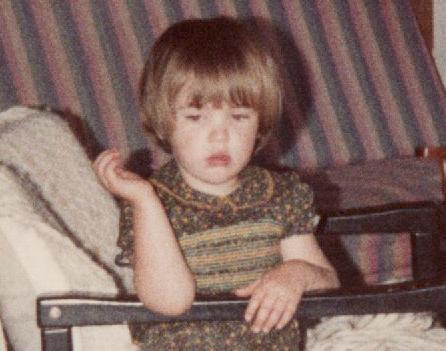
A young girl with short straight brown hair sits in the side of an armchair, wearing a smocked dress covered in small yellow and green flowers. She holds the arm of the chair with one hand, and the other hand hangs in the air beside her face. She's looking down and to the right with a lost, sullen expression, her mouth slightly open.
Me at age 2-1/2, 1978.

“If intergenerational trauma can alter DNA, why can’t intergenerational love?”
― Alicia Elliott, A Mind Spread Out on the Ground
Ralph

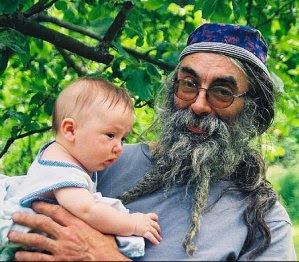
A close-up photo of a man holding a baby under an apple tree. The man has long grey and black hair and a braided beard. He is wearing a purple hat and a blue T-shirt, and holding the baby who is wearing a white summer shirt with pale blue trim.
Ralph holding my then three-month-old son, Taliesin.

It was a cloudy day in a November of my childhood when Uncle Ralph gave me my first carving tools. Of course, he wasn’t called ‘uncle’ yet, at the time, but never mind. I was probably about ten, and it was a rough time in my childhood, for a lot of reasons. If I’m remembering the correct occasion, he arrived without Auntie Lidia, alone on his motorcycle, round leather riding goggles pinching in the top of his hair while the rest of it flew out behind him. Even his beard flew along beside him as he rode down our driveway. He’d come by for my birthday, and I remember his wonderfully long brown eyebrows and much longer braided beard leaning down to me with a most beautiful leather bag held out in his dark hands that always looked more weathered than you might expect for a man his age. "Here. Got you this.” He said, and opened the bag to show me all the different types of tools he’d packed into it.

I remember thinking how annoying it was that he said he’d ‘got’ it for me, when it was clearly his own bag. Eventually I realized the gift had been much more special for having been his own bag, than if he’d just bought me something at a store. It was a piece of his heart. And he’d given that gift to me at a time I needed not only to be seen, but to have an outlet for my pain. I suppose Uncle Ralph’s outlet was creativity—often with carving—so he gave that to me.

Uncle Ralph was always carving. We’d be sitting at the beach and he’d pull out his pocket-knife and just start whittling a piece of driftwood. He even seemed to sometimes have a little carving in his pocket, which he’d randomly start working on, as we sat somewhere. The parents of our community built a playground for our new school, and of course Ralph was one of them. He carved a driftwood log into a horse that became burnished by a couple generations of children who rode to our adventures at recess. Ralph gave us adventure. He was a printmaker, as well, and once did a project with the older kids at school, where he taught them to make self-portraits in relief out of cardboard, and then together with them built a cardboard bus, in the windows of which the kids put their cardboard selves. Then he laid a giant paper on the bus, and drove a steam roller over it to make a print! I’m a printmaker too, now, and I don’t have to tell you why.

When I got married, Uncle Ralph carved a wedding bowl for me, and he stood up to sing for me and Markus. He welcomed Markus into his life without any hesitation or awkwardness. Just treated him like family, instantly. After we moved back to my home island, and spent more time with our family, here, and as Markus’ beard got longer and longer, I once suggested Markus might braid it like Ralph’s. “No. That’s his thing,” Markus replied. Uncle Ralph is so cool his style is untouchable. And yet he’s one of the most open and accepting people you could meet.

He loved children. Not in the way that fawning adults often seem to ‘love children’, with affection and concern and more than a little superiority. Uncle Ralph related to children as if they were equals. That might mean he said somewhat inappropriate things, at times, leaving us staring blankly, where his bald humour bewildered us. But it also made us feel seen. He had four of his own children, and eventually a bunch of grand-children, but he still had time and acceptance for all of us hangers-on.

When my son Taliesin was little, he had a knit yellow toque with ear-flaps ending in long braided strings and tassels. He quite correctly identified that this was the sort of hat Uncle Ralph would wear, and used to dress up in that hat, sometimes with colourful vests and scarves, and call himself Uncle Ralph. When Tali was turning five, and had been digging away at a hole near the driveway he called his ‘mine,’ Uncle Ralph and Auntie Lidia arrived with yet another unexpectedly perfect birthday gift: A shovel. He’d bought my son a small, light-weight, but very functional shovel, and carved TALI into the handle, in ornate capital letters. Tali’s own shovel, for his own mine. One year, Tali only invited four people to his birthday: Jon and Rika (similarly unique and close adopted family of ours), and Uncle Ralph and Auntie Lidia. Tali stipulated that Uncle Ralph must bring his guitar. So he did.

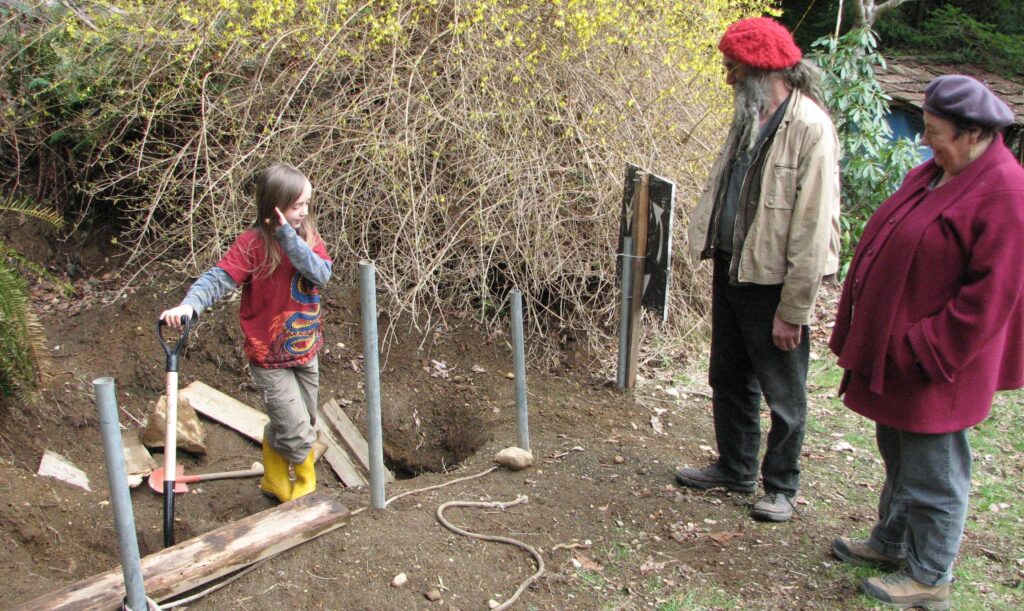
A young boy stands in a small hole in the dirt, holding a shovel in his hand, and surrounded by strewn pieces of wood. A man with a grey beard and long hair stands with a short grey-haired woman, looking at the boy as he describes the "mining work" he is doing.
Uncle Ralph and Auntie Lidia getting a tour of Taliesin's mine.

Uncle Ralph could be very loud and very quiet. At that small child’s birthday party he sat very quietly noodling on his guitar, creating a beautiful environment for our celebration. At other times he could be loud and even abrasive; shouting and joking and laughing, playing baseball, drinking beer, and dancing and dancing like you could never imagine his long hair tamed; his hands and legs quiet, or his face not wild. But also at a party—a big party—he was a safe place to go to. Often he’d be down by his creek, sat down by his makeshift barbecue, tending to his special salmon that everyone back up at the house was waiting for. I used to just go sit down there with him, quietly. Often it was just the two of us, maybe with an auntie or another kid. And he’d tell us about his plans and projects; the fish that were circling in a pool of the creek; any number of his amazing inventions. Or maybe he’d just sit carving, and then eventually hand us a beautifully decorated stick. We loved him.

Ralph became ‘uncle’ to us, really by word of mouth. He was one of a small group of cherished friends of my parents with whom we spent a lot of time, growing up. And at some point Gail told us she’d like us to call her Auntie. It felt like a gift, so I called her Auntie Gail, proudly. Then one day Lidia mentioned that if Gail was my auntie, then surely she was too, so, by extension, Ralph became my uncle. He never needed or asked for that name, but he also took to it like it had always been. I guess because it always was.

One day I was leading a class back from a forest adventure near Ralph and Lidia’s home, and I looked over their fence as we passed, to see him sitting on a chair in his yard, whittling. “Hi Uncle Ralph!” I called over the fence, and he looked up and smiled, as about a dozen of the kids I was with hurried over, hands and chins pulled up onto his fence, and shouted, “hi Uncle Ralph!!!” He just kept smiling, like this was nothing out of the ordinary, at all.

His hands kept working at the wood on his lap, as his eyes smiled out from his mess of hair and brows, and his lips called out the musical tone of his reply: “Helloo!”

It was maybe five or six years ago that I first knew he didn’t recognize me. I’d known he had dementia for quite a while, but it always seemed like a minor thing. He covered it up well, joking about his mistakes, and acting like they just didn’t matter. Maybe they didn’t; we knew him well enough to not feel too lost in the confusion, and we covered up for him, too. But that day at the store, I went up and gave him a hug, and I could see in his eyes that he was hugging me because it was the appropriate thing to do, not because he knew who I was. “Hi Uncle Ralph,” I said, and he answered, “can’t find where I parked my car.” He hadn’t driven for years, but he went on to describe a car he also hadn’t owned for years. I figured he’d walked down to the store, and when he started asking for Lidia, I knew he was scared, and just hoped Lidia was on her way to pick him up.

Lidia was the great love of Ralph’s life. I know from my own experience that living with a person like Ralph is adventurous and beautiful, and also challenging. And too, his love is profound. Maybe like a child’s love for his mother is profound. And in moments of uncertainty, Lidia was Ralph’s touchstone. This past Christmas, the last time I visited Ralph and Lidia before he went to hospital, Uncle Ralph wanted to leave the house he’d lived in for over forty years to ‘go home,’ but despite his confusion, he still spoke to Lidia as though he knew her. No matter where his mind went, she was at the foundation of his sense of security.

Just before Ralph died, lying small and thin and quiet, his feeble knees bent under the hospital blanket and his mostly white hair pulled back into a ponytail, he struggled to breathe even shallowly, but once in a while he shuddered, opened his eyes, and looked into Lidia’s, where she sat in front of him.

A few days later, after Ralph’s family had all gathered around and said goodbye, after his mind had carried its trove of stories and inventions to some other place, and his body had left the world we live in, I attended a paddle-making workshop that I’d signed up for many months before. We’d been tasked with finding some kind of learning or self-discovering in the experience of carving our paddles from 2×6 cut blanks. And although I struggle with following directions, I didn’t have to look for meaning, that day, because Uncle Ralph was there with me. As I pulled the draw-knife, manipulated the small plane, and eventually sanded my paddle to a nice smooth object, I felt enormous gratitude for this man who first inspired me to carve, but more than that, I realized that I was using carving to heal from the loss of him. In living, he gave me the tools to heal from his death.

Goodbye, Uncle Ralph.

He would say, ‘hey, bye.’

The Little Threadbare Bag of Advices From the After Times

 foreground. Photo by Emily van Lidth de Jeude.

When people talk about severely traumatic events, they often refer to "The Before Times". I heard this during Covid, when we could look back at carefree parties and hugs with our grandparents. I felt this when my father died, and his half of my family crumbled, and I remembered all the beautiful times we'd spent together, not knowing they were our last. 

The Before Times are always somehow fanciful. All the negativity disappears and we pine for those Before Times like unrequited dreams. We long for and resent our lost innocence. Before I had Long Covid, I could just walk around on the streets and up the mountains and down into the valleys. In the After Times of Long Covid, I sat in my car and watched people walk by on the sidewalk, wondering how they did it. Walking seems miraculous, now. Those times when I could just call my Dad up to tell him about my day seem like magical memories. Those times when our children played together in the blissful company of grandparents who are now gone seem miraculous, now–now that we're in the After Times, where we are jaded and distrustful and fearful. We're in the After Times, where we are wiser. Supposedly. Wisdom, too, is not what we thought it was, when we were innocent.

I'm still waiting to feel wiser about my mother's death. I know I'm in the After Times, now, but I've just stepped over the threshold and I'm totally lost. People keep offering me pieces of wisdom, and every time I think, "Ah-ha! That's something that can help me on my journey!" And I stick the wisdom into my little threadbare bag of emotional tricks to pull out when it will inevitably be required on my Big Adventure Into the After Times. Like: "It's OK to cry; that means you're connecting with your mother," and "Mourning is a sickness. Like Long Covid. You've learned to integrate and adapt to that sickness; you can do it again." And every time these words feel like they came directly from the Deep Dark Mystical Universe of the After Times, where people are wiser and all the ones who've lost their mothers were apparently waiting around to catch my fall, and pull me into their embrace. Thank you.

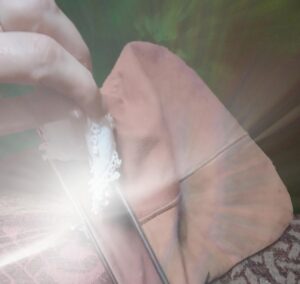
A hand is pulling a dainty white handkerchief out of a faded pink-brown purse with a metal clasp. A huge flash of sunlight reflects off the metal clasp.
Mum's little purse with her handkerchief.

And those pieces of wisdom hang out of my little threadbare bag of tricks; their invisible heavy tendrils dragging on the ground as I wander along. This is my bag, now. It was my mother's very fancy purse when I was small. She kept her handkerchief in it, and a thin Lancôme lipstick, and a smaller, matching purse for money. It carries the Memories That Kept Little Me Safe, when it was hers, and not mine, and I didn't understand this little bag. Now it's mine, in the After Times, and I'm filling it with the Advices of the Wise Ones.

One of the things I couldn't have known in the Before Times is the value of tears. I remember my mother's tears hitting this bag, inconceivably, as she reached in to get her lipstick, because they sometimes fell when nothing seemed to be the matter at all. And I remember them hitting this little bag; how it darkened with the damp, and how my mother swore at her own tears. Now I see the tears in the eyes of these Wise Ones; the weight and vulnerability and frankness of being The Ones Who Held Everything Together in the Before Times, but then the tether broke. 

Now we're floating. Lost. Nothing is together and we are free like we never wanted to be. We have tears falling when nothing seemed to be the matter at all, but their dampness leaves stains that are inconceivable to those who haven't yet arrived in the After Times. Now I'm one of these Wise Ones and these tears are my welcome mat. And my wisdom-offerers are crying, because even after all the years of living in the After Times, the sorrow is not less. It's just integrated. And it's good to know someone understands. Accepts my tears. Our mothers are gone.

The sorrow doesn't get less. It just gets integrated. That was one of the mystical advices offered to me in the Before Times, but I didn't understand it. I just added it my little threadbare bag of advices, where it sat unused on my mother's shelf, in the times when I didn't know what that bag was for; nor how to use it or what it meant, or even how it was possible at all. People gave me this advice and I couldn't see it, because I was in the Before Times. We can't fathom what we have never seen. So my bag sat on a shelf in my mother's house, quietly, being hers.

But now I'm here in the After Times. My beautiful Mama was wiped off the earth so that everything that was so real and tangible before feels now like a cruel slap in the face; a memory of wonder and longing: her arms around me; her little red purse and strange assortment of French lipsticks; her mystical explanation that soon it will be my turn to understand; her tears telling me goodbye; her voice and her song and her love. Now I'm the wise one because I live in the After Times, with my sisters and my aunties and even my dead mother. Now I'm the wise one because I have the experience none of us ever wanted to have. 

Now I meet the people whose mothers are aging; dying maybe slowly or imminently or in some far-off unknown and terrifying future, and suddenly they look to me like I'm a keeper of this horrible wisdom. But I look away from their searching gaze and into my Little Threadbare Bag of Advices From the Wise Ones of the After Times, and I wonder if I'm supposed to dispense these now, or wait. The answer is wait. These people who have not yet lost their mothers are still living in that blissful and mystical Before Time, and none of the Advices will help them because they don't yet know the horror. 

This Bag of After Times Advices is like a set of unlabelled keys to a house of horrors. You can't know which keys fit which doors because you can't yet see the doors. We can't fathom what we've never seen. 

Don't think you need to be prepared. You can't look over the threshold. You will have to reach the After Times, eventually. But not now. 

Right now, you still live in the Before Times. Do that, instead. Live those Before Times like they are your last. Because they are; all of them are. Live them with your children and your parents and your friends and the lost ones and the found ones. Because one day you will look back and say "Why did I waste those Before Times not knowing how magical and mystically beautiful they were?!" And you'll put that too into your own Little Bag of After Times Advices, and you will look at those who haven't crossed over yet, and understand that nobody can give advice to the uninitiated, because we can't fathom what we've never seen. 

Anyway, it doesn't matter how much you treasure your Before Times, it will never be enough. The more you love, the more you lose, but the losing is a kind of sublime sorrow that means you loved. So love. Just love.

I went out to see the auroras last night, and I cried. And it was beautiful, and I cried. I had to force myself to leave the house, because my grief feels like a prison, sometimes, but I went anyway. It was the first time ever I saw the aurora dance, and I was heartbroken not to be sharing it with my mother, so I told myself she was everywhere. In the auroras. That's one of the Advices From My Little Bag. Then I met another person on this horrible beautiful threshold of the After Times, and I did not open my Little Bag of Advices. We just cried. And in the dancing lights, I saw her tears.

Listening for Birds: Cancer Is Not a Journey

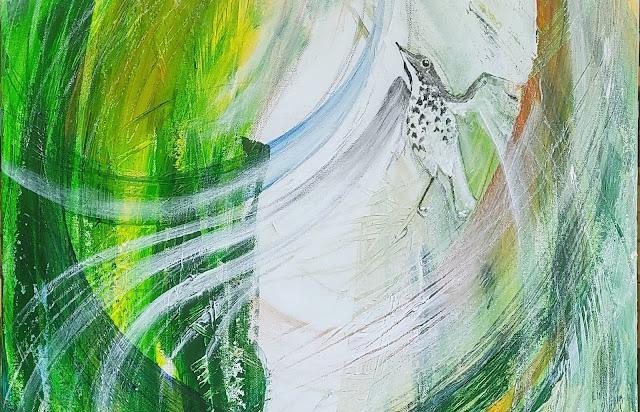
A small graphite-drawn Swainson's thrush is swept up in a mess of green, white, and graphite swooshes. Abstract painting by Emily van Lidth de Jeude
“Go and Make Yourself Content, My Love” (detail).
Swainson's thrush in my mother’s garden, to the tune of the Unquiet Grave.
Painted with acrylic, graphite and coloured pencil, by Emily van Lidth de Jeude.

I was walking down from my parents' house to mine, over the crest of their driveway where the wind blows steady. Not like the rest of the property, through which it tumbles this way and that, scatters just a few leaves, or bursts out of a single storming fern. Over the crest of the hill at the top of my parents' driveway, the wind passes smoothly and calmly, sometimes crisp and smelling of leaves, sometimes damp with the weight of snow and sometimes full of the heaviness of summer and dragonfly wings. I've walked here alone and with my children after Christmas dinner, my heart and belly and arms full of treasures. I've walked here holding my chest against hidden sobs when I couldn't be what the world wanted of me. I've walked on my parents' driveway even when they lived in a different house and I visited rarely, and always it has been a place of the wind and the gathering and freeing of perception and feelings. A place of reckoning or accepting. Not that night.

I was walking down from my parents' house on the evening we came home from our first trip to the Cancer Clinic, two weeks after the sudden and unexpected removal of a stage-four tumour from my mother's brain. I was walking down that driveway and there was no wind. The driveway felt flat, although it's not, and it's rocky, but the rocks were dead that evening, which they never are. The April grasses and blossoming trees were bereft of colour. Impossibly grey. There was no birdsong, no frogsong, not even the sound of leaves, and when I looked at the hillside I thought it might just go away, if my mother died. When my mother dies. She keeps reminding me: "We all have to die, sometime." But I don't want those words. That was one of the many logical thoughts that evaporated when the doctor told us we won't be returning from this trip. And we stared blankly into the empty air and our tears were silent.

I find the word "journey" as people use it for cancer absurd. We use it like we can pack for a trip and just take in the ride. But it's not that kind of ride.

Glioblastoma. Someone should make a horror carnival ride called Glioblastoma. You get in a little comfy bucket seat and it chucks you out into the sea. Then down a vortex you go, into a drain where you almost drown but NO! You're not allowed to drown! There are things to live for and places to see and you might have a few days or weeks or months or years of good life, so LIVE!!! And you can't feel your right side, and you can't find all the words that were here just yesterday, but now more than ever, you want to, need to LIVE!! So you come out of the vortex on the chemo train, where you get whipped back and forth over trestle and track without warning or reason through whacking slaps of sheer terror and poofy clouds of deep love and acceptance: A bird? NO! Slash! You're going to die! Slash! Maybe not so fast–Slash! Everybody is trying to help you–Slash! You're so strong–Slash!–Take some more pills–Slash! Love, love love–Slash! 

Love can't save you and everybody's talking to you like a child–Slash! Now you're the wise one–Slash! Let's finish your sentences for you–Slash! We could get an ice-cream!

Slash! You get to meet the guy who will administer your death–Slash–but only when you want him to–Slash–Be GRATEful!!

Slash!

Nobody wants you to die!–Slash–Let's go shopping!–Slash

Why are you so tired?           Slash.

Slash. 

You fall out from the carnival ride one sunny morning, and you smile up at the sky and look for birds. 

But there aren't any. 

My mother loves birds. My whole life has been decorated with her hushed exclamations of "oh! A warbler!" and "Did you hear the snow geese go by this evening?" My mother hears things many of us don't notice, like the pips of babies and the tone of ducks that tells her whether they're coming or going. When my father gently delivered a helpless baby owl into my childhood, my mother raised it on chopped liver and caught mice until it grew up and flew to the trees. But she heard its voice separate from the other owls, and she answered it, and taught us to make the hungry-teenage-owl call, too: Psssshhht! Pssssssshhhhhhhttt! That owl and its offspring came back to visit us for decades.

Terminal cancer is a strange thing. We want a timeline. Something to hang a hat on. To work with. To put in the calendar, and at the same time we want to live in the moment and not have to plan for death or even how to visit with all the loved ones. But just to sit and hear the birds. Except the chaos of medical interventions, social supports and emotional upheaval means not a minute exists of just. Peace. 

Until one day, we can't take the chaos anymore. Out of necessity we ignore the forms we're supposed to be filling out and decline the offers of new prescriptions, new dosages, delivered meals and all the services we know are needed. One day we just need to be.

This week I saw my father's eyes in a rare moment of stillness. They used to shine with his intensity; they used to sparkle and shoot beams of aliveness. But recently they've looked tired, and there were big wide tears balanced on his lower lids and he was just making a sandwich. I don't hear so much as I see, and I am starting to see again. I saw my brother's cheeks, this week, taut with small lines of agony as he pulled me into his arms and didn't let go. As he asked if he can take our mother to have her broken arm looked at. Cancer is not a journey. It's a horrible carnival ride, and sometimes we catch glimpses of the world, as we spin. Sometimes, also, we catch glimpses of the beauty that brought us here to begin with; that holds us up through the fear and the changes we didn't see coming. My parents walked out, hand in hand, today, to look at the blossoming of the world they share.

And I began to hear the birdsong, this evening. The teen-aged ravens are pillaging the robins' nests, to a great outcry, as you can imagine. We thought the black-headed grosbeak that my mother says only comes for a short time every spring had left, but it's been singing again. The wrens and towhees are hopping in the bushes, until they flit out to the pine, to make their plans. The offspring of our owl are impressing people along the trails, these days. And for some reason the flickers keep sitting around on the ground. My father says get the aphids out of my apple tree, but I can't reach them and we both know that's OK. Bats are out, tonight, delighting my peripheral vision. And as I walk up over the crest of my parents' driveway this evening, I hear the nighthawks dropping on their prey, all around me. The wind is warm, and it's summer now, and my parents are just watching a movie with a couple of mosquitoes like it's a normal evening. Just living this incredible life in an incredible world, and learning to step off the carnival ride and hear the birdsong.