Canadian social practice artist working with participatory performance, ecological systems, and community storytelling. Works span installation, performance, writing, and socially engaged projects.
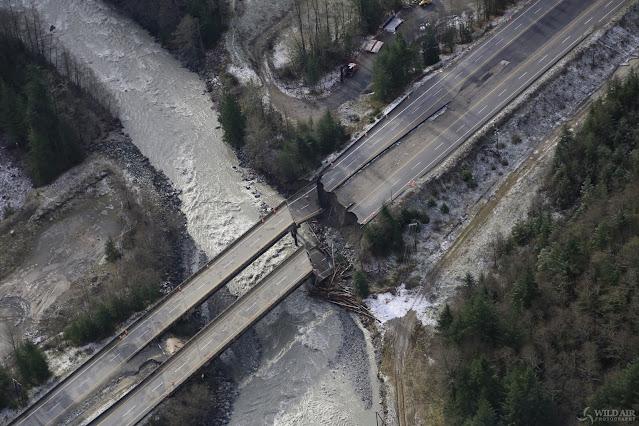
One of the various road-collapses on the Coquihalla Highway in British Columbia. Photo used with permission from Douglas Noblet, of Wild Air Photography. Douglas has shared a series of these photos here, on Facebook.
I was looking at these photos by Douglas Noblet, this morning, which seem to be mainly of the Fraser Valley, and highway collapses of the Coquihalla and the Hope-Princeton, and I found myself wondering how long it will take to restore our infrastructure. Months? Maybe years for the Coquihalla? (More on what's broken, here: North Shore News)
Then I realized that we're in climate free-fall, now. Any restoration is going to be hampered by increasing floods, blizzards, storms, fires, deep-freezes and heat-waves, not to mention the human issues like pandemics, supply-disruption, economic strife, labour and food shortages. Maybe the answer isn't how to get back to old-normal, but how we move forward instead of backward, and build new normal.
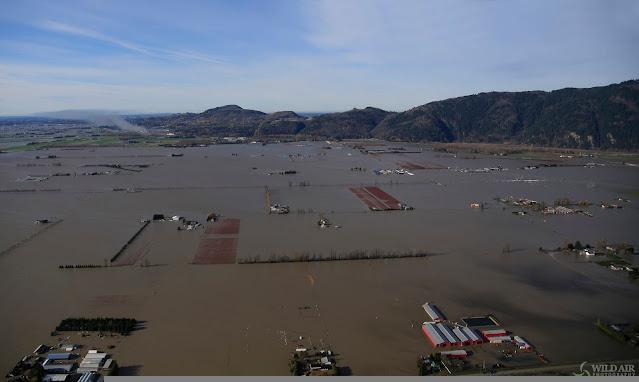
The flooded Sumas Prairie in British Columbia. Photo used with permission from Douglas Noblet, of Wild Air Photography. Douglas has shared a series of these photos here, on Facebook.
Upon hearing that thousands of dairy cows (half our province's dairy production) have drowned in their barns, I am ashamed to say that along with immense grief, I felt an urge to go buy "the last milk". My cousin reports that stores are bursting with panic-shoppers. What was I thinking?! Milk?! Really?! Milk is not a "need". Thankfully we didn't buy any.
But you know what is a need? Love. Community. Right now we have some of our extended family here, who out of sheer luck got briefly lost on their way home to Princeton, and managed to just barely miss being caught in the Agassiz slide. So they're stuck here on the coast while their town is flooded. The silver lining to this situation is that, while we haven't seen them in over two years, due to the pandemic, last night I got to feel their arms around me, again. It was a huge relief.
I know these photos are terrifying. It's awful to wonder if or how our kids will manage if schools remain closed, as they are now throughout the flooded valley and other towns. It's awful to wonder how our supplies and jobs and communities will survive if these highways and industries don't get repaired soon. It's awful just to wonder what we'll feed our kids if they can't have cereal with milk and they refuse to eat anything else! I know–it's a fear borne of privilege. But it's fear. We feel so easily lost at sea with no answers; no clear vision of where we're going. This fear leads to panic shopping, competition, greed, and more reckless consumption. It's exactly how we got to this place in human evolution, and the only way out is to let go of the fear.
Now I'm thinking about how we can change, instead of rebuilding. It isn't the cows' milk we depend on, nor the farmland it came from. The Sumas Prairie was created a century ago by draining an enormous wetland. It was never our land, to begin with, and the question of buying milk seems so meaningless, now. It isn't the infrastructure that creates land for industrial farming, or brings our groceries from afar, nor the schools that hold our children while we work to buy the milk. It's love. Love is what makes us resilient. Love is what has brought citizens and business owners in the town of Hope to feed and shelter travellers trapped by mudslides. Love is what gives us the strength to grow food in the first place, to share with our neighbours even when we barely have enough, ourselves, to hold up our communities and hold on to hope. Love is what supports us while our minds are doing the amazing task of being agile; of finding solutions to problems we never fathomed just a few years ago. Love is what creates agility of mind and heart, and gives us the power to survive.
The new normal we need to be building will become evident as the old normal is no longer available. For me, it is found in the arms of my loved ones. If I never drink milk again, and if my whole "normal" becomes something I can't even fathom, right now, it will be built on love.
Last night I attended a devastating meeting in my community. On the surface it was pretty run-of-the-mill: A bunch of councillors and a few municipal staff members slowly picking their way through various presentations, decisions, and amendments. They came to the end of the meeting having checked a few boxes, put a few requests to bed or to progress, and made a few small changes to the contentious bylaw that much of the population feels will rip the heart out of our community.
As a member of this community for all of my life, I've been passionate about the things that tie us together. Some of those things are the big organized events, like our traditional summer festival and Remembrance Day celebration; the fishing derbies that used to happen when I was a kid, and the raft race. The events change over the years, but always hold us together, and are facilitated by a huge number of dedicated creative people, who look at their community and see the need for celebration. We're also held together by the little things, like stopping to chat with an oncoming driver in the road, or letting the community cat into the car for a ride. We're held together by actions like calling a neighbour for help clearing a dead deer or sitting down with Bob for an ephemeral but deeply interesting conversation.
Sometimes the holding together is very intentional. So many of us contribute time, ideas, and great heart to this community. In my own work and volunteer roles, I've been bringing newcomers into engagement with our wilderness, so that they can love and value this place as I do. As an artist I've grown in this rich stew of community to see the value of social practice around inclusion and diversity. I consider my work (both public and gallery-focused) a method of bringing out the voices of my fellow citizens and reminding us all of our personal benefit to community.
Most of the artists I know are somehow engaged in broad community visioning, and feelings are our language. When we sit around talking together, we talk about the big picture. We talk about the vibe of the public spaces in our community, and the vague drifting of public sentiment; of community values. We talk about the social-emotional gorgeousness we're trying to promote, and the social change that is or should be happening. We see the big web of emotional connection that makes a community whole; that tethers us to the place we live, and we work in our sometimes-mysterious ways to keep it alive.
Yes, these feelings and ideas can be vague, but we are masters of vaguery. The term "vague", like its linguistic origin in the French for "wave", might seem unthreatening. But a wave, however gentle, rarely comes alone, and sometimes builds slowly, unseen. Sometimes a tidal wave is a wall of water. Often it's just a going out of the tide, and then a returning, and returning, and returning, until the one unappreciated wave has enveloped a whole community. "Vague" is the feeling of community sentiment, and it can be just as devastating.
What devastated me about the council meeting was our council's lack of vision for that social web; that vague sentiment. During the meeting, various councillors mentioned that the bylaw was needed in order to "control" people, and that "not all people are our friends". They spoke often about controlling the population, but never about listening to it. They received a long series of letters asking them to consider the social damage caused by a pending bylaw that will severely limit access and enjoyment to our most popular public spaces. Letter-writers spoke about the casual gathering that will no longer happen after this bylaw is passed, and the councillors chalked it up to a lack of understanding on the public's part. The one councillor who opposes this bylaw spoke up to explain–again–his fierce opposition, and the idea that they shouldn't be pushing through a bylaw that is so publicly reviled. They carried on without acknowledging his words. Finally, they picked away at some of the wording of the bylaw, ostensibly to help people understand, without seeing the big picture. They didn't let any feelings they had to get in the way of their bylaw. They deafly ignored their populace, and carried on as though nothing had happened.
Is this a crisis of imagination? Maybe. Maybe we as a society are becoming less and less able to imagine a future we want to live in; to envision it so that we can create it. We're less and less able to see a future that is inclusive if we can't imagine how to converse or get along with those who we deem "not our friends". We know, in the abstract, that we need public policy that is expressly inclusive, but we, like our councillors, have forgotten how to include our neighbours. We've forgotten how to listen to the great vague voice of public sentiment.
The big picture in public policy is public sentiment. The public doesn't like this bylaw. We don't like that we haven't been consulted. We don't like that our letters were not read aloud, nor discussed for the many serious points they bring up. We don't like the feeling that a series of long complex bylaws will govern our footsteps and enjoyment of community spaces. We feel oppressed by this bylaw, and our feelings are what this community is made of.
As our community becomes more and more developed; more populated, more busy, more anonymous, we're losing sight of the importance of neighbourly compassion in our social exchanges. As our municipal government takes on more control, we have relinquished the desire to affect change, ourselves. We've given up. We are increasingly more likely to call the authorities to deal with dead deer or fallen trees instead of hauling them away, ourselves. We used to use them for meat or firewood; we're no longer permitted to do so. And as our social agency is taken away, we're growing more likely to call the authorities when a neighbour offends us than to bring over a drink and have a chat. Our crisis of imagination has led to a crisis of public agency.
And when I realized that the vision of that big picture–that public engagement–is missing from our leadership, I realized that we also have a crisis of feeling. We elected leaders to do a dry job of picking through legal documents and approving or rejecting requests, but we didn't empower them to feel. When they post on public forums they are expected to remain impartial. We expect that the work of governing should be done without emotion, but it concerns emotion a great deal. We need our councillors to have compassion for the woman living in a tent behind the library, to prevent them from passing bylaws that would outlaw her presence. We need them to notice the people feeling alarmed and horrified by proposed changes and ask themselves how those feelings will impact the big picture of our community. We need them to feel, so that they can take our feelings into account; so that we feel heard and empowered to engage in our community.
There's a rambling little debate going on in my community right now about what kind of mural should go up on the lock-block retaining wall that acts as the de facto welcome sign to our island. This wall faces the ferry dock, and forms the north side of the pedestrian walkway from the dock to the rest of the island. This is the plain concrete wall that, for generations now, has welcomed commuting adults and teens, newcomers and old-timers as well as untold numbers of tourists to our small island. Sometimes it sports blackberries trailing down to catch our shoulders as we pass by, sometimes obscene or public-shaming graffiti, and almost always an assortment of hardy edible weeds that pop out from its crevices. But most noticeably, it's a boring grey wall of concrete lock-blocks.
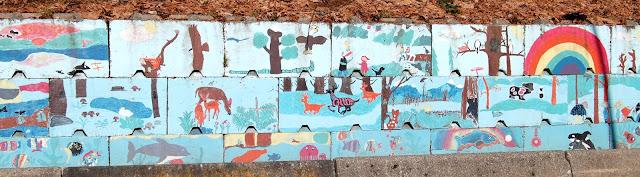
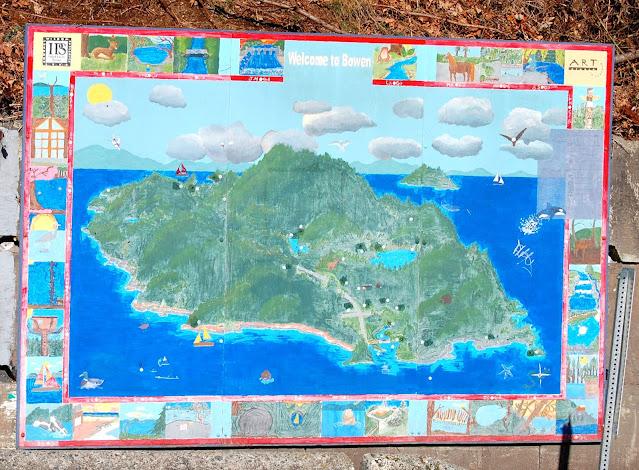
Once this wall had a vast mural painted by kids from the local school–each block was painted with scenes of local wilderness or animals. Another time there was a big plywood mural of the island and local information, painted with students from our middle school. Yet another time, the wall was the stage for a temporary piece of public art made by one of our local artists, which peeled and disappeared over time. For a few years now, it's been just a boring grey wall of concrete lock-blocks.
The Nex̱wlélex̱m/Bowen Island lock-block wall, as it was once painted by local kids. Photo by Singne Palmquist
So now there's a call out for proposals from artists who would like to paint it, and an ongoing debate about whether it should have been offered to the island's children. I'm an artist; I'd love to have my work up in my own community and in fact have been talking with other artists about a collaborative work depicting local wildflowers for this wall. I love the idea of something that pleases and educates at the same time. But now I'm going to champion kids' art, for this wall. Because I think the many benefits of a mural painted by local kids far outweigh those of a more polished, "adult" mural.
Belonging
One of the best ways we can build sustainable community is to encourage engagement and concern for home and community. We need people to care that this is their home and feel that it deserves looking after. We care about things we feel ownership of. Kids feel ownership of their artwork–especially artwork that was designed and developed by them and displayed publicly in their home.
Why not just put their artwork up on the fridge? Well we can, of course, but not "just". It's not the same as being given the respect of one's community by being welcomed to paint right on our most visible wall. Being welcomed by one's community is, of course, the nature of the meaning of "home", and we want our kids to feel at home. We want them to grow up with the idea that this is their home, that their home matters, and that how they engage with it matters. We want them to feel seen; to feel responsible; to feel that what they do makes an impact on their home and future. So we have to give them that responsibility.
Imagine how it feels to children who painted the wall, say, in grade five, to then be walking past it twice every weekday on their way to and from school in grade eight. Some will tease each other about it; some will feel embarrassed, some will ignore it, and some will feel a quiet or even loud sense of pride. Almost all of them will feel connection. They'll feel a sense of belonging. Maybe they'll walk down to the dock to meet visiting relatives, and escort them past the mural they painted. Maybe they'll take selfies with their contributions. Maybe they'll move away and come back to find their marks still here, a few years later.
Not every child will have an opportunity to paint this wall. Maybe just one or two grades, and maybe it will be repainted every five years. But the kids who didn't paint it may have siblings who painted it. They may just have witnessed it being done and feel the tendrils of connection reaching out. They'll know that this mural was done by and in honour of the children of our community, and they'll feel valued.
Nex̱wlélex̱m/Bowen Island plywood info-mural painted with local youth. Photo by Singne Palmquist.
Learning
As a parent and educator I'm quite horrified by the many ways children are silenced in our culture; their ideas and skills unvalued, as they're seen as "still developing" in the system that is meant to develop them. Have we forgotten the meaning of development? It means growth. Children are not vessels into which we dump our own ideas for eighteen years and then trust to follow along like good little citizens. Children are growing people with their own ideas and skills and values, and they learn from experience.
Everybody learns from experience. You can read as many manuals as you like about how to fix your appliance, but the first time you actually open the appliance up is when you really start learning. So what do kids learn by painting a mural in their community? So much.
They'll learn simply from experience about materials: what type of paint is needed for this project? What chemical properties make it suitable and why won't classroom acrylics do the job? What types of scenes are acceptable, and why? Why has the council requested local flora and fauna, and what exactly are our local flora and fauna? What is the political and social work that goes into a project like this? And all the various applied maths, sciences, communication and language skills that come as a matter of course in the creation of this mural.
Why can't they just learn those things in school? Why can't they paint the school walls? Why does this painting have to be making a visual chaos of our lovely manicured community?
Chaos = Development
Because growth, development, and learning need chaos to thrive. It was the chaotic and random assortment of elements that evolved to become life as we know it, today. It was and is a chaotic assortment of peoples, places, climates and experiences that make humanity as we are, today. It was the chaotic rambling experiments of toddler-hood that gave our children the chance to develop skills they now depend on, like language, social skills, gross motor skills and dexterity. They learned all of those things from observing and experimenting, free-range, under our benevolent supervision. They didn't learn them in a school, from textbooks. They learned them because they felt at home in their homes, and made big messes and had big accidents. Our homes were chaotic. Now our kids are older, and it's time for them to be out in their wider community.
Our children are part of our community, and they are our community's future. Instead of being tucked away, seen and not heard, they need to feel they are part of it, so they can grow and thrive here.
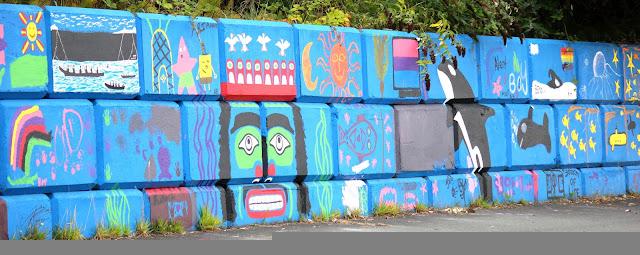
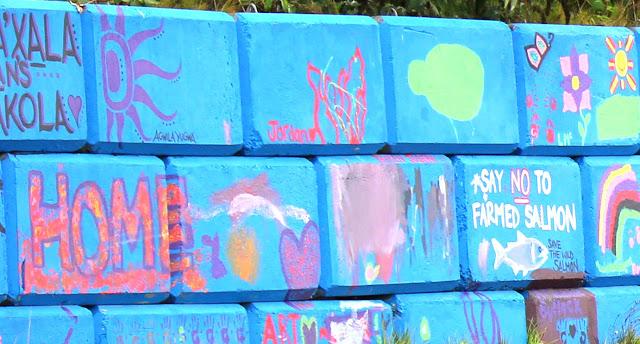
Kids' mural on lock-block wall at the Alert Bay ferry marshaling area. Photo by Emily van Lidth de Jeude
Responsibility
We look after what matters to us. If we want our children to grow up to look after their home and community, we need to allow it to matter to them.
We used to have an old cherry tree near the lock-block wall in the cove. Kids would climb it and hang out there, waiting for their commuting parents to walk off the boat. But eventually someone injured himself falling out of the tree, and then the tree was deemed too old, so was surrounded by fencing, off-limits to our kids. Now the area has been beautified as part of an effort to create a more visually-pleasing entrance to our community. There are all sorts of gorgeous plants there. I love them. But do the kids? Do they care about a tidy garden that they were expressly excluded from, and forbidden to play in? I asked my kids. My daughter says, "It's just another place you can't go." And how long before that garden is a dumping place for their litter and midnight beer cans, because it was never something they cared about in the first place? We look after what matters to us.
So how about a playground? What if we put in a playground at the ferry terminal, and the kids can play in blissful harmony with the commuters and traffic and beautiful gardens. Sure, but what kind of playground? Is it creative, dangerous, messy; fun? Because those are the things that make a playground worthwhile. Imagine an area full of tools, wood, climbing-trees and ropes; dirt and shovels and paint. That would be an amazing place for feeling belonging, learning new skills, and developing a sense of responsibility. But these playgrounds tend not to be condoned, these days, because of the chaotic look of them in our otherwise manicured landscapes, and because parents are afraid of danger. But danger–risk-taking–is essential for learning and for developing a sense of responsibility.
Another section of the Alert Bay mural. Photo by Emily van Lidth de Jeude.
Risk-Taking
If we never take risks, we can't learn to manage or mitigate them. Learning is all about taking risks, and risky play is a big part of progressive education all over the world. Just like babies learn to walk by taking risks and falling, teens learn to navigate social situations by taking risks and making mistakes; suffering heartbreak and social exclusion. We take risks as adults when we choose partners, careers, or make big purchases. We learn from all of those risks, and that's how we grow as individuals and how we evolve as a species.
Our kids are part of our communities; our species. They need to take risks like painting a public wall or climbing public trees so they can learn how their community works. You know what the boy who fell out of the tree learned? In addition to some of his physical limits, he may have learned that he was valued in his community, when he was seen, held, and tended to by an adult who was not his parent.
Kids who paint walls take many risks, in choosing what and how to paint, in consulting with their peers, their supervisors, and their community, and they take social risks in walking past the mural they painted every day for a few years and navigating the conversations that arise. They take personal emotional risk in putting their artwork in a public space and facing the opinions of their community. And that social risk helps them to grow into their community–to become a part of it, deeply and permanently because they grew and thrived there.
A community that sits in stagnant contemplation of its perfectly manicured surroundings is not growing, thriving, or evolving. And who wants that?
It's not only kids taking risks in this scenario. It's us, too. It's the adults who give the kids our most prominent walls to paint and just trust them. That's a huge risk, especially for those of us who are quite afraid of the chaos of childish experimentation. But it's a risk we have to take if we want to grow as individual adults or as a community. Is it like giving our living room wall to a bunch of monkeys with paintbrushes and walking away? Maybe. But I'd rather have something unexpected that I can learn from than live in a stagnant community. It's a risk we have to take if we want to grow.
As a community we are growing. Our kids quite literally are our future, and if we want them to grow into responsible adults who care about their home, then we need to make them a part of it, now.
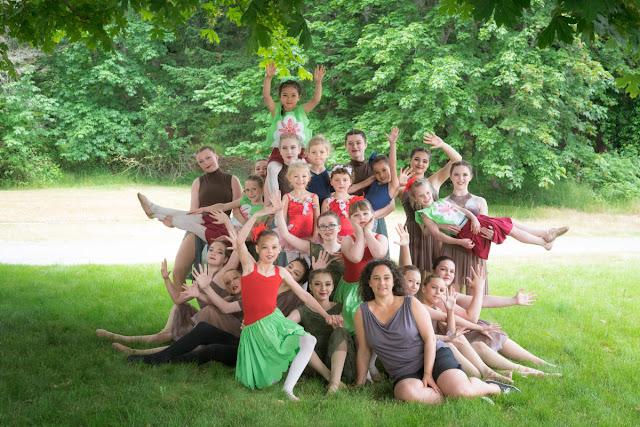
Mara Brenner with students of Gabriola Dance, 2019. Photo by Inspired Spirits Photography.
When I was 26, bewildered and a bit in shock with the reality of new motherhood, I took my baby to our local Family Place, and sat around the edges of the activity, watching. Whining lines of Suzanne Vega ran through my head: "in the outskirts, and in the fringes, on the edge and off the avenue"… as my baby nursed his way through the stress of a new situation. Out of the fray of mothers and toddlers and snack foods and plastic dishes came the most welcoming smile. This woman actually held out her arm to me, beckoning me to join the group. And Mara became my friend.
Years later, as we sat around her trailer home together, watching our kids play and leap from the furniture, I complained about my back issues, and Mara deftly used the opportunity to attempt to convince me to take the adults' ballet class that she taught in the evenings. I told her 'no way'. I explained that ballet left me behind when I was nine and had a pot belly and knees that didn't straighten all the way. She convinced me anyway, and next term I cautiously and inelegantly stepped into her class.
Mara doesn't just teach ballet. She's an accredited Pilates instructor, and a passionate life-long-learner of human anatomy and movement. She looked at me while I attempted the ballet moves and explained exactly what my muscles and bones were doing and how I could optimize for my personal development. When she didn't have an answer, she went away and researched or thought about it until she figured it out (yes – that's the definition of being a life-long-learner, and an expert!) She sees people not only as moving, learning bodies, but as humans with struggles and opportunities. I soon became one of Mara's 'Tequilarinas' – the group of adults who danced until 9pm and then went for a tequila at the pub, together. After a year, my back was healed. I started wearing superhero costumes to ballet.
Through her friendship, clear strong vision, and unflinching determination, Mara gave me more confidence and opportunity than any other teacher I've had.
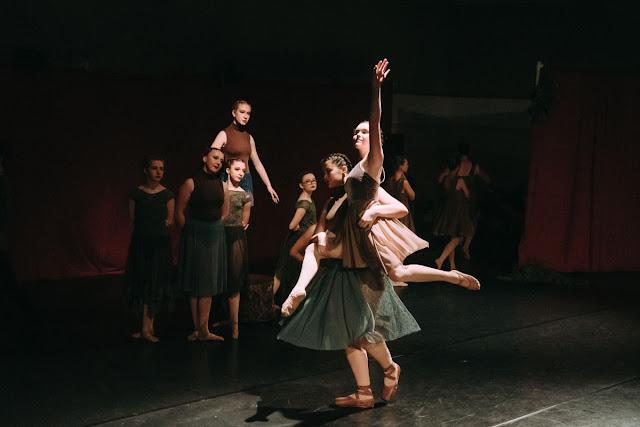
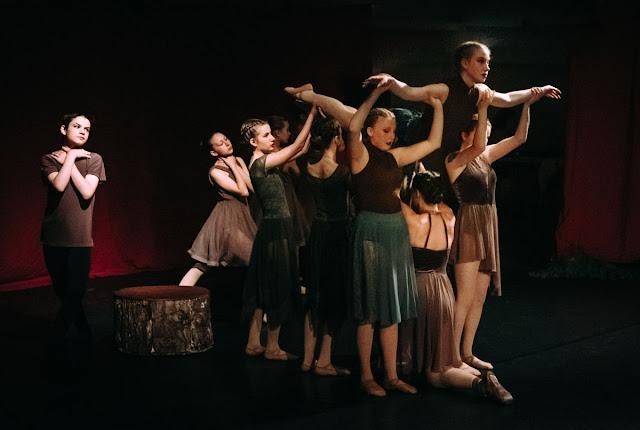
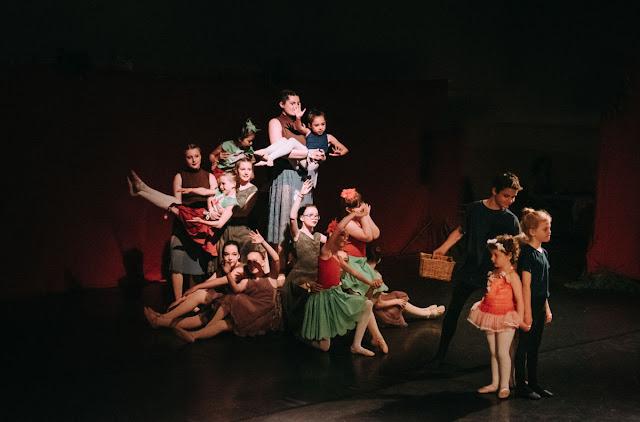
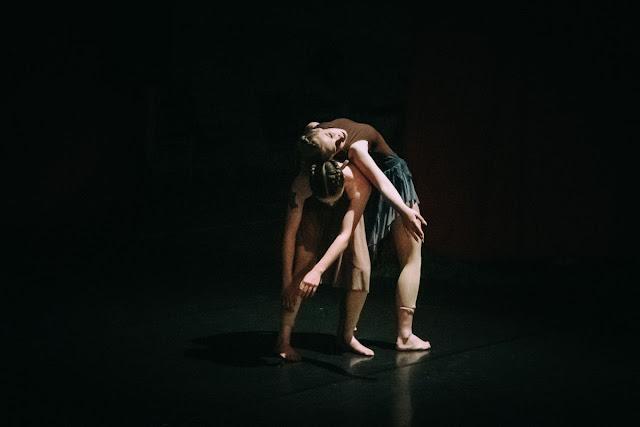
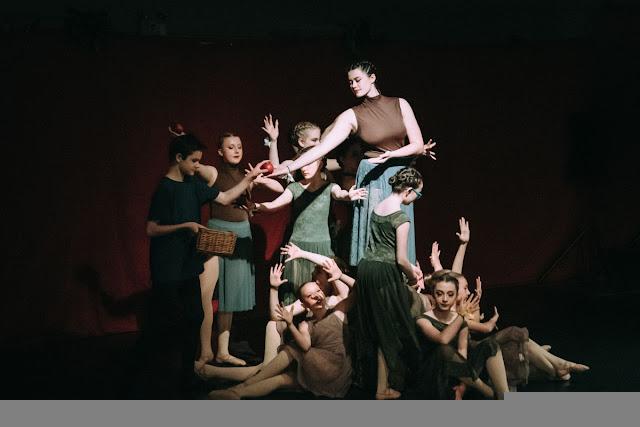
Gabriola Dance year end showcase, 2019: The Giving Tree. Photo by Inspired Spirits Photography.
Mara Brenner taught our island's children and adults ballet, and also used her company MaraGold Productions to bring world class artists to perform not only on our small island, but at various Canadian venues. She worked her dancing feet off one hundred percent of the time, not just giving to her community, but building it. She exemplified a kind of character strength and courage that's hard to maintain, but essential in a thriving community. Eventually her community turned its back on Mara and her family.
Our land use bylaw only allows trailer-living for a brief period of time while landowners are building a permanent dwelling. As you can imagine, building a home on the wages of a ballet teacher and a glazier, while also raising two young children, takes longer than it otherwise might. Mara and her partner, Stu, lived in a trailer on land they owned, while slowly building their permanent home. At the point they were forced to leave, they had only built the foundation. Theirs was almost an idealist story of dreamy island living, until our snooty bylaws pushed them out.
Gabriola Dance year end showcase, 2019: The Giving Tree. Photo by Inspired Spirits Photography.
So they left! Mara and her family found their new home on Gabriola Island, and quickly turned the small outbuilding into a dance studio. Around the same time she was gifted her own ballet teacher's extensive collection of ballet school costumes, and she threw all her extensive skill and passion into Gabriola Dance. Last weekend I went to see her year-end showcase, and I was moved to write this article.
Gabriola Dance year end showcase, 2019: The Giving Tree. Photo by Inspired Spirits Photography.
Finally with a permanent roof over her head on Gabriola, Mara pulled everything out of her heart and poured it into ten years of parenting and teaching in her new community. This 10th showcase felt to me like watching my friend stitch up all her passions and skills into one beautiful, powerful package. It was in many ways her gift to the world.
Gabriola Dance year end showcase, 2019: The Giving Tree. Photo by Inspired Spirits Photography.
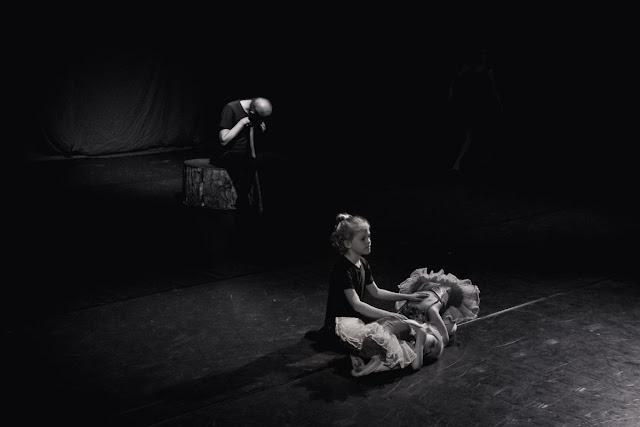
I think we all hope we can make a difference in the world – at least leave it a slightly better place than we found it. These days many of us are just hoping we save enough of the world that our children will grow old before it's gone. So Mara developed a dance performance of Shel Silverstein's 'The Giving Tree'. The piece brings together students of many diverse ages and training levels. It's profound and moving, but Mara didn't leave it at that. Working on this project brought up a great deal of conversation among students about climate change, and it became clear that she needed to deal with the prevalent angst and anxiety that today's children harbour around this topic. So she had all the conversations with them, and at the end of the dance showcase, she hosted a talk back with biologist Melanie Mamoser and registered clinical counsellor Caitlin Kopperson, to discuss the affects of climate change on childhood anxiety. One of the most urgent questions, of course, is 'what can we do?', and although there's no clear answer to that, there were some good ideas, and the conversation at least left me feeling hopeful that people were talking about it, and that children's voices are being heard in this discussion.
Gabriola Dance year end showcase, 2019: The Giving Tree. Photo by Inspired Spirits Photography.
With The Giving Tree, Mara does something I hope we all manage to do in our lives: She orchestrates her many gifts into one grand oeuvre, showcasing not only the work of her students and other community members, but pulling them all together in a kind of hopeful community invocation. May we all have the courage to live our hearts' dreams and create a better world in doing so, each in our own ways, and all within community.
Gabriola Dance year end showcase, 2019: The Giving Tree. Photo by Inspired Spirits Photography.