Art that is engaged in change-making is relevant to humanity’s evolution as a social species, by encouraging and supporting us in making the changes necessary for our survival. During this time of growing climate and social crises, we need work that challenges us to evolve for the better. Relationships – interaction between individuals, our histories and common future – are how we grow. It’s essential that we take time to listen and know each other; to learn from each other’s wisdom and stories. I hope that as artists we can give people space to be heard, to hear other people, and to change and make change.
Tag: art
Teens
"Children are the most disrespected group of people in the world."
She turned her small face and looked at me intensely, maybe to see how I would react; maybe to be sure I heard her. She was one of a group of three teens who had just come through an installation about children's rights and left her comments behind. I hoped she felt respected by me as she walked out of the gallery.
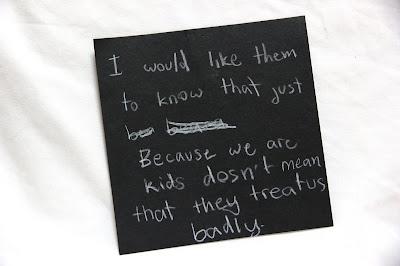
And then it hit me: "Group of people." That's how we see them. We see them as separate from us until we judge them to be old, wise, or experienced enough to earn our respect – as adults. We determine their clothing, their food, their education and other activities, their freedom to come or go and quite often we even determine their friends and hobbies. They tell us their fears and hopes and great big plans and we pat them on the shoulders and ignore them; carry on with our lives. When do we look them in the face and ask them to tell us more? When do we ask their advice? When do we heed it?
I grew up and eventually returned to raise my kids on a small island. For longer than I've been alive, the teens from this island have boarded a ferry five or more days per week to attend school on the mainland. Unchaperoned. As a teen I got up at six-thirty, washed my hair under the tap, dressed, put on my makeup and left to walk to the ferry at seven. In the winter I arrived at the dock with my hair frozen like brown sticks around my face. Unlike some of the other girls, I did not push into the crowded washroom to fix it in the two tiny mirrors. I sat at the end of my age-group of kids, watching the same kids get beat up day after day, watching the animated conversation of some girls I wasn't friends with, picking at the Naugahyde seats and avoiding the splash of the food fights. I moved further down when people started bringing compost to throw.
Twenty minutes each way. Morning and afternoon. The ferry commute was a drag, and a shared ritual, and also the rocking, floating bridge between the confines of childhood and the expected freedom of adulthood. In the 80's we skipped school by going en masse to the mall first thing, then arriving at school before lunch to report that we were all late because the ferry was late. We sometimes argued about the ethics of how to accomplish this feat. We shared time every day, but we were individuals. We had different stories, different values, and different lives.
Our island also has a history of ferry exclusion. As a public-private entity, the ferry corporation has the right to ban people, and they have done so on various occasions that I remember. They banned a teenager in my grade for vandalism and mischief. He eventually took the ferry with a chaperone to attend school. They also banned our local petty criminal because the police thought it would do him good to get out of the community where he regularly slept in parked cars and picked drunken fights in public. It didn't help. Community members transported him back to the island in the trunks of their cars. My point is that these people, too, are individuals.
At various times we've had issues arise on the busiest ferry runs, like unidentified persons vandalizing the boat or flooding the toilets, and sometimes the first response is for the captain to make announcements to the teens. He tells them, as a group, to smarten up and behave themselves. He tells the adults on the next commuter run to rein in their children. Recently people in the community have been wondering aloud in public why teens (again, as a group) can't just behave themselves for twenty minutes at a time. Few, if any of us, know what the current transgression is, but we know it's been committed by teens. The captain has reportedly announced to our teens that if the unnamed incidents don't stop, the police will be involved and the surveillance footage will be reviewed. For me that crossed a line.
If criminal acts are being committed, it's perfectly reasonable to check surveillance footage and involve police. It's perfectly reasonable to expect people not to commit such acts, and to take steps to ensure that they stop. It is not, however, reasonable to reprimand, admonish, threaten and sometimes (as I have witnessed) deny service or civility to an entire group of people based on the premise that one or a few of them are suspected of having done something wrong.
When adults smoke on the ferry (which is wholly a no-smoking/no-vaping zone), they are asked to butt out. If they refuse, they are taken to the chief steward's office and spoken to, as individuals. I've seen this happen. I've stood at the chief steward's office while an adult smoker was being spoken to, and every effort was made to treat me with respect and provide me with service despite the fact that I, too, am an adult. The same can't be said for our teens' experience. Every teen is a suspect in some people's reasoning.
What do you think that does to a person? Imagine if every day you walked to work only to be eyed suspiciously at the door to the building, and every time a toilet overflowed, people called all the adults in the building together to reprimand them. How would you feel about using the toilet? Imagine if, when some person stole from the vending machine, they denied all adults access to the vending machines. Would you respect the people who judged you? Would you still care about upholding the values of your community if you weren't expected to uphold them anyway?
I'm responsible for denigrating teens as a group, too. When I was barely more than a teenager myself, a truck full of students from a nearby high school pulled up to my grandmother's lawn, dumped an assortment of fast food wrappers out the window, and drove off. A few years later, walking along our island road with my four-year-old son, we spied some litter in the ditch. He immediately shook his head and muttered grumpily, "ach… teenagers". I can't remember how I led him to that assumption, but I am certain I did. Now he's seventeen. He and his sister have somehow managed to get through a bunch of teenagehood without dumping their trash. Even more than navigating teen years myself, parenting teens has taught me to see them as individuals.
Teens are worthy of our attention as individuals. They are humans learning to be adults, and counting on our respect and exemplary modeling to help them navigate their surprising, sometimes frightening individual journeys. If we want them to see adults as individuals rather than a homogeneous, brooding group, we need to model to them how to do that. We need to see them, and we need to show them how seeing people is done well.
Some teens are children. They have an innocent wisdom not yet drawn out of them by the pressures of growing up. Some teens are also adults. They know their own minds and they know when they haven't done wrong. Some teens see us when we're wrong, and they know when we aren't hearing their voices. Some teens know when not to bother speaking up, because we've lumped them all into one disrespected group and we can't hear their individual cries. In fact, when teens report crimes committed by adults, they are often ignored.
It's time we look into the faces of the children and teens we pass and see them as simply humans. It's time we see them as individuals with wisdom, needs, values, and human rights. It's time we respect them.
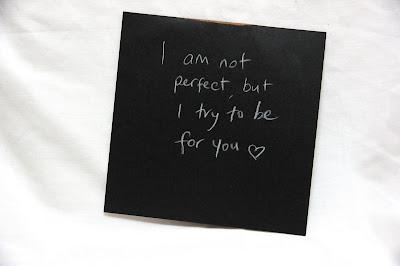
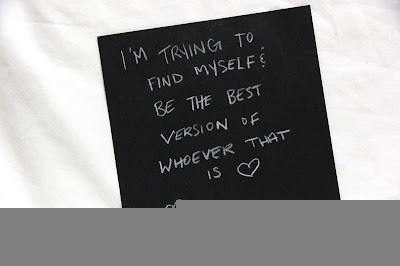
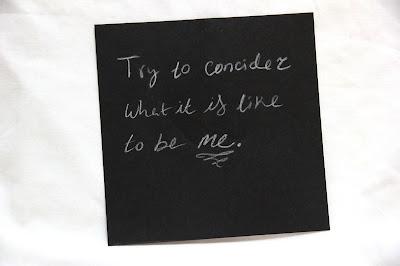
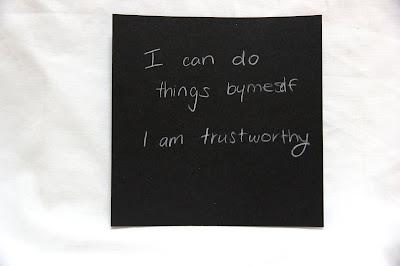
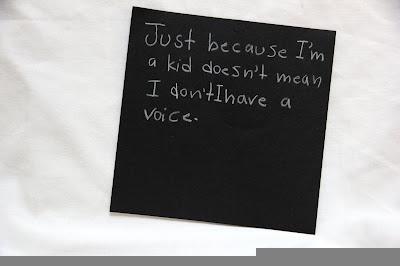
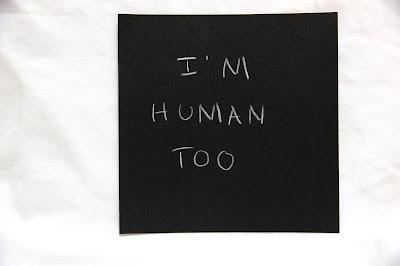
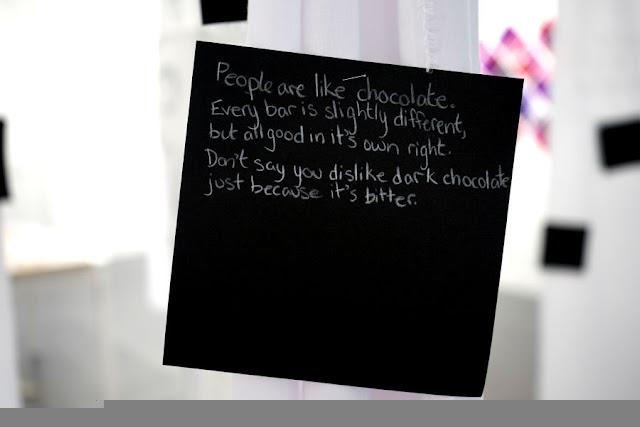
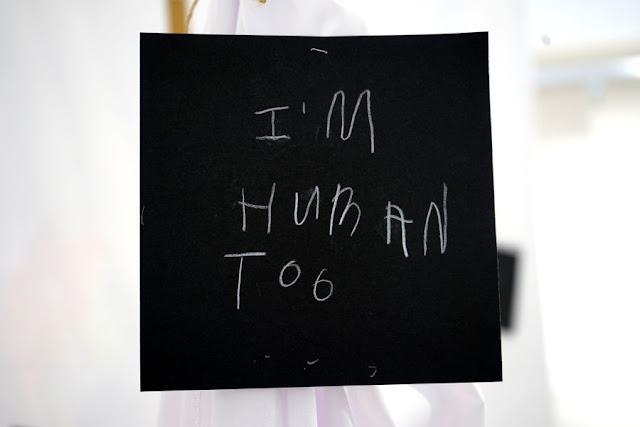
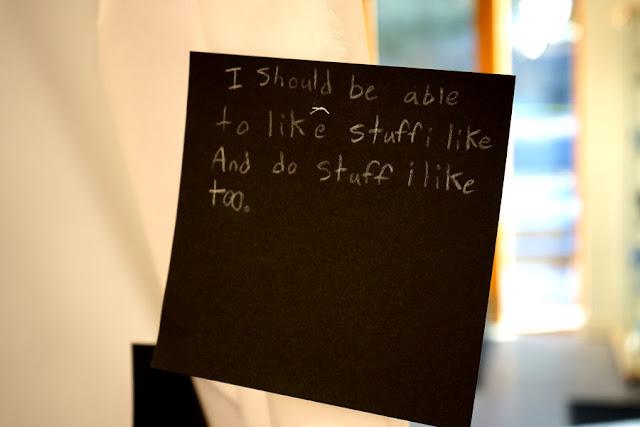
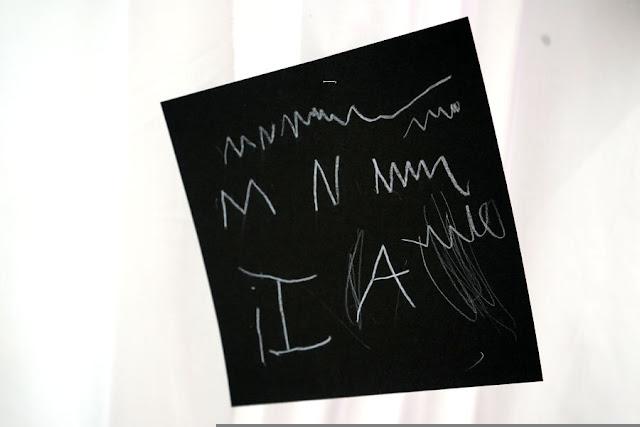
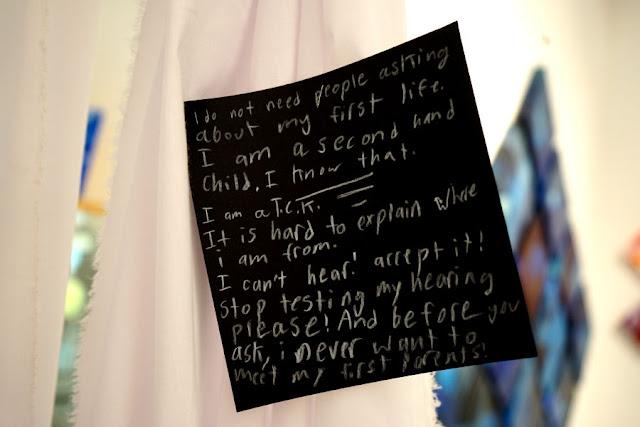
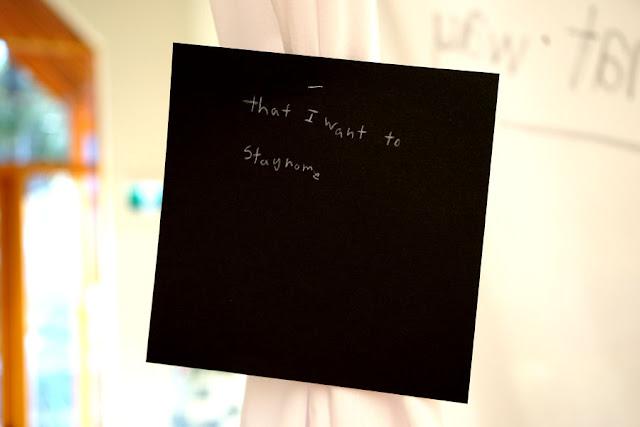
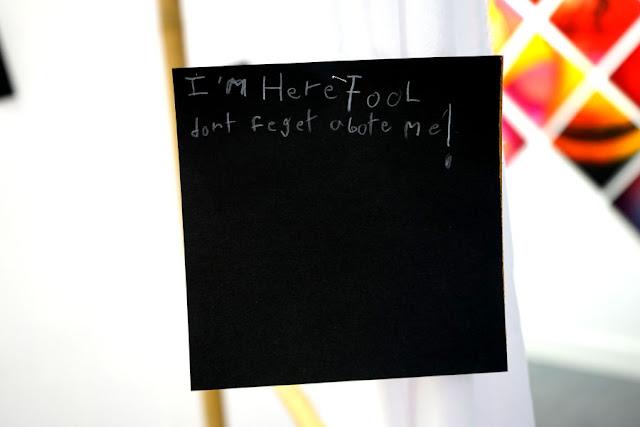
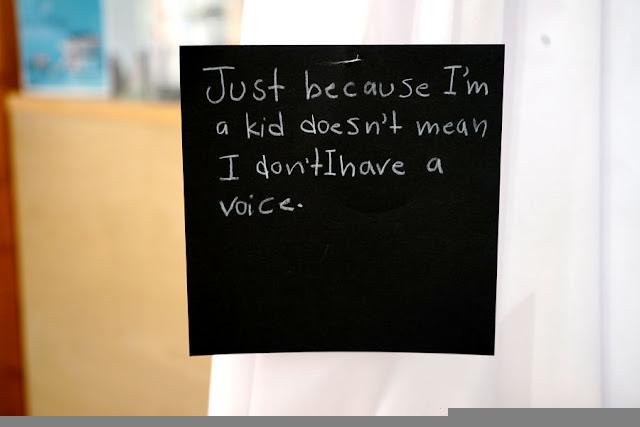
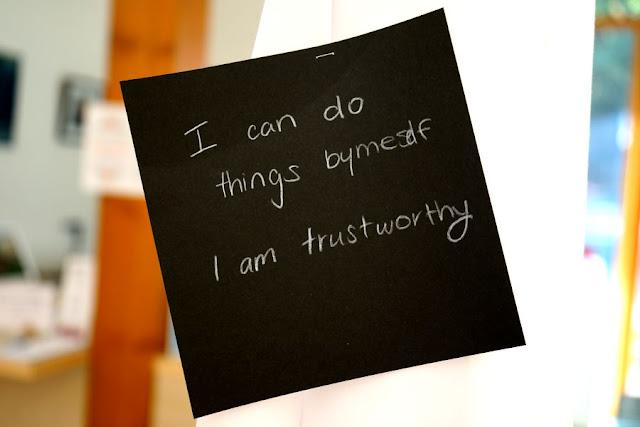
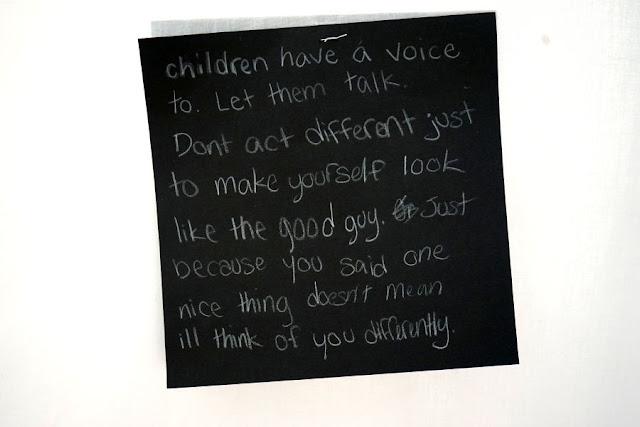
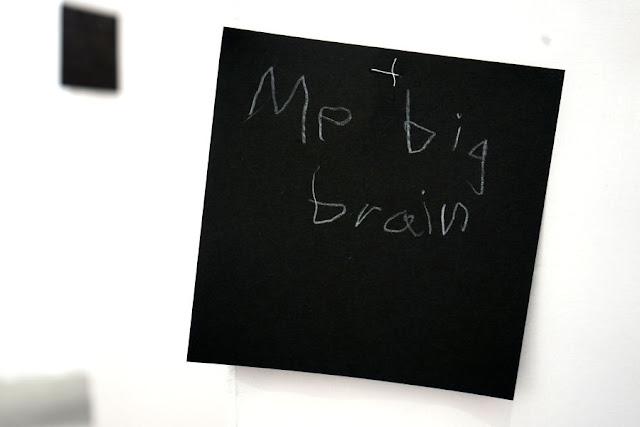
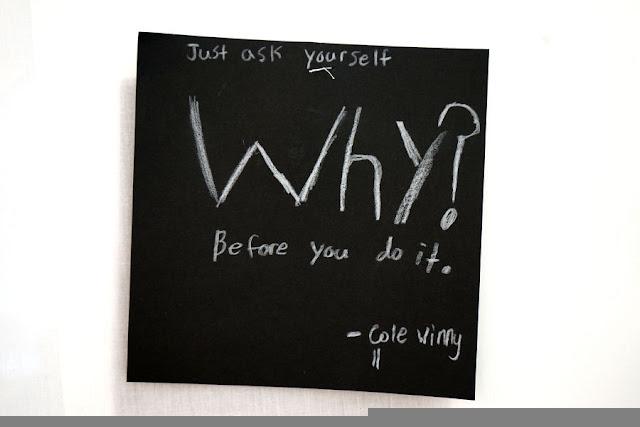
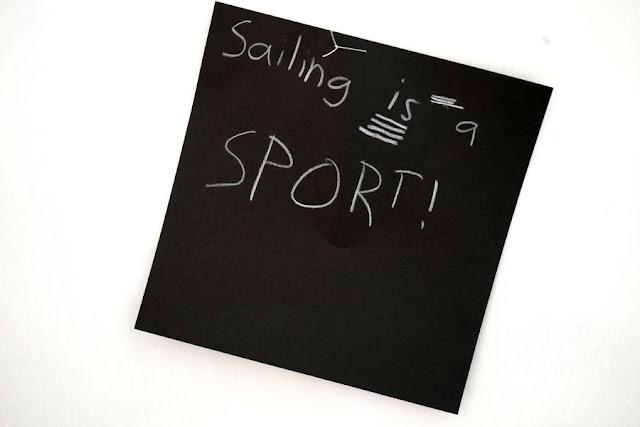
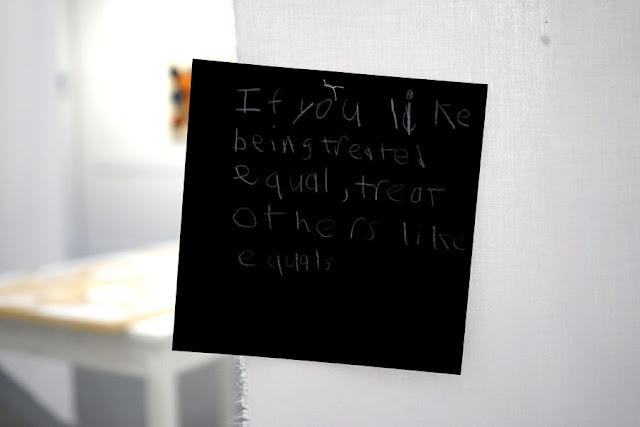
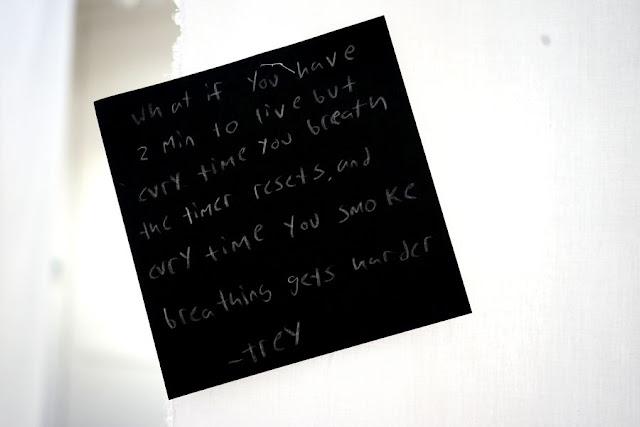
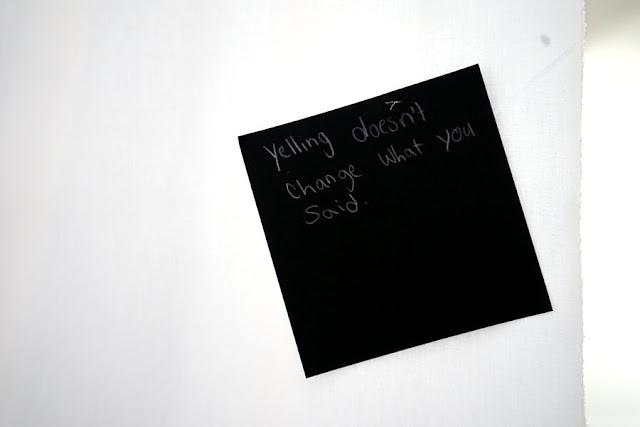
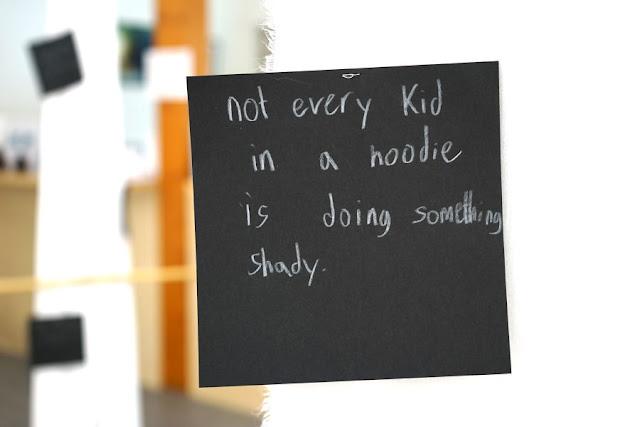
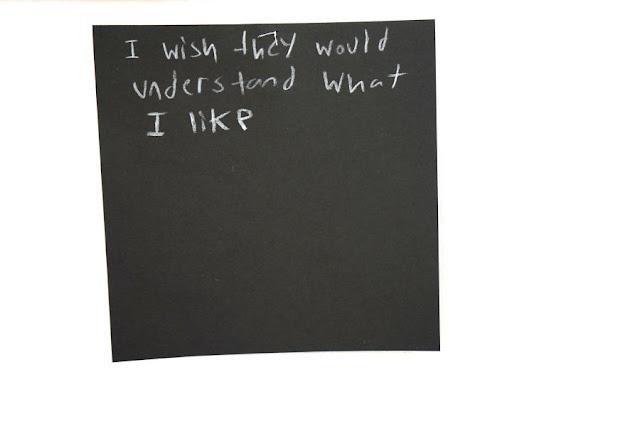
*The handwritten statements accompanying this article were contributed by teens at a 2019 installation of a piece called "Building Blocks: What do you want the adults in your life to know and respect about you?"
Originally published in October, 2019.
What Children Need Us to Know
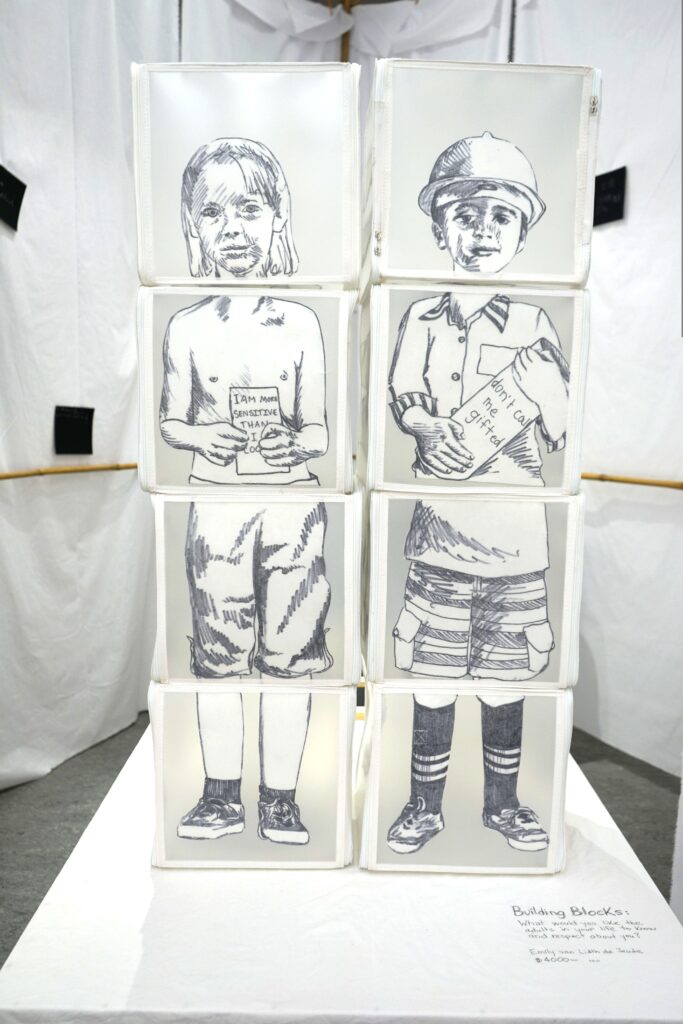
My 2019 exhibit included, as its central installation, this piece about children's rights. It's made of plastic clothing storage boxes, which I covered in portraits of children, holding signs that state their various answers to the question, What would you like the adults in your life to know and respect about you?
The children who contributed the answers for this sculpture range in age from 5 to 17, and the sculpture is interactive. Visitors to the installation were encouraged to put on white gloves and play with the cubes, rearranging again and again to make a vast assortment of different children.
The installation included a small tray of black paper, where young visitors could write their own answers to the question. I hung these answers around the installation as they appeared.
These are the voices of our children – mostly anonymous children, and therefore everychild. These are the things that all children need us to know. They need us to shed our busy-ness, our righteousness and our preoccupations and hear their voices. And their voices keep coming. Let's be good listeners.
Originally published in October 2019.
Working Class Heroes: It's Up to Us to End Capitalism
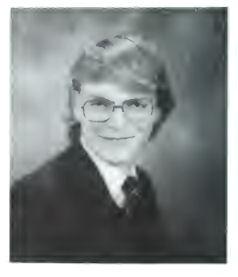
First there was the Universe. Then there was Markus. From then on this planet (Earth) was one of the most important things in life (his life). Then he went to SMU. This in and of itself was not very important – but while going there, he noticed many things about life which he did not like. These were mainly small things, such as holes in the ozone layer of the atmosphere, acid rain and projected populations for Earth. Having decided to change all this, he found that he already had the solution; the only problem was that he would have to become a V.V.I.P. (very, very important person) in the scientific field to implement it – and to know just about everything there is to know about this world. He is planning to start by learning everything about engineering or computers, and continue from there.
That's an excerpt from my partner's grad write-up in his 1988 school yearbook. He tells me he must have just finished reading the Hitchhiker's Guide to the Galaxy, and adapted his writing-style, accordingly. He also tells me it sounds pompous. My partner is anything but pompous. He's just lost all the confidence he had in high school; he doesn't think he can save the world, anymore.
The list of devastating global circumstances facing humanity has played out even faster than we 80's kids could have imagined, and we feel helpless. My partner did go on to study physics and engineering, eventually getting his degree in Computer Science. He now goes to work every day, finds, fixes and creates bugs in software that is used all over the world for resource management. Some of this 'resource management' is towards protecting the ecological welfare of the planet; a lot of it is simply management for destructive capitalist ventures. My partner does whatever he is told to do. Then he comes home exhausted, eats dinner, pets the dog, plays accordion, and goes to sleep, only to get up in the morning and start again. On weekends and vacations he sometimes makes adventures to soothe his tired soul; mostly he works at replacing our old house with less mouldy materials, hoping that at least his efforts will provide shelter for his family. Dreams of saving the world went away a long, long time ago. Shelter and survival in the capitalist world is his current goal.
Does it sound like drudgery? He would say no. Because he's living the dream we were all fed as children, and in fact he's doing better than that: He's raising free-thinking unschooled children in a park-like setting, hoping they'll have the guts and wherewithal to follow their own dreams in a way he never managed to do.
But wait – that's what his parents were doing too! They sent him to the best school they could find, where he learned to fly airplanes, wear a suit, and feel confident that he really could grow up to be a very, very important person in a scientific field and change the world. But he didn't. Why not?
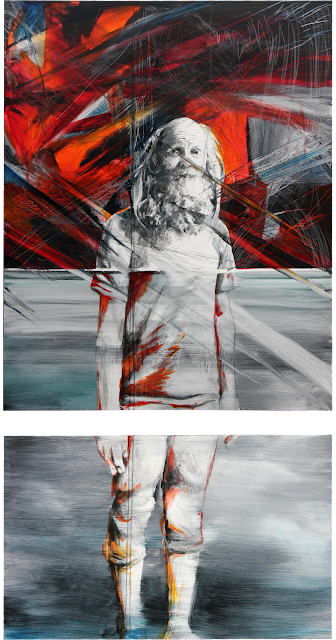
Why do all of us hope that our children will grow up to change the world, and not change it ourselves? Somehow we seem to feel that we can trudge into the capitalist system that requires our compliance and still raise kids who will magically end up elsewhere. Why on earth would they? We ask our children to follow their hearts and at the same time we tell them to follow our culture's mandated path to adulthood. We expect them to be different and brave and to change the world and save us from the disaster that capitalism has caused (seriously – if you haven't already, go read that article and watch the video), but we're too afraid to get out of the system, ourselves. They will be, too.
John Lennon wrote in his song Working Class Hero (full lyrics and song video here), three full generations ago:
When they've tortured and scared you for twenty-odd years
Then they expect you to pick a career
When you can't really function you're so full of fear
A working class hero is something to be
A working class hero is something to be
Keep you doped with religion and sex and TV
And you think you're so clever and classless and free
But you're still fucking peasants as far as I can see
A working class hero is something to be
A working class hero is something to be
Our kids follow our lead. Unless we break this cycle, our children, like us, will reach adulthood and discover that the only feasible path is the one their parents took, and they will have children themselves, and they will hope that their children will save them. And with every generation the outlook is bleaker, and with every generation we hope the next will save us.
Capitalism is killing us. Our school system is part of it. Our work ethic and career paths are part of it. Our diet and housing and everything that we consider to be essential is part of it. These things need to change, and WE need to change them–not our children or our children's children. There is no more time for us to live in fear. And there is no point hoping that the few brave souls who unschool their kids or drop out of the system or attend rallies will do the work for us. There will be no new reality until we all jump on board. We are killing ourselves with capitalism and we have to stop, now.
Originally published in February, 2019
Emotion and a Big Stick of Graphite
I have this huge big massive stick of graphite. I mean it's about the size of a Landjaeger sausage. And soft. I keep it wrapped up in leather so I have something to hold it by without sliding around in the graphite, myself. And I use it to attack my work. The giant smudgy dark and soft and hard lines it makes are as enigmatic as my feelings.
The biggest reason I'm a hands-on materials artist is emotion. I use art to deal with my emotion, so my art is usually pretty expressive. There's a lot that comes out of the body – feeling through physicality that then gets transferred to the work. I remember my highschool art teacher encouraging me to paint by just holding the very end of a long paintbrush, and I struggled hard with that. I struggled to keep control, until I grew up and realized that she was right: when the conscious mind loses control, the unconscious is still in there, and finally shines, with all its crazy, unpredictable ways. Emotions are freed.
I have an autoimmune disease that has never been formally diagnosed but has been explored for decades by my faithful doctor. My symptoms shift and change and I've been through all kinds of potential diagnoses and healing modalities. The one thing I can tell you for certain is when I'm emotionally distressed my body reacts with inflammation. So my doctor sent me to a psychologist who explained to me that my body was harbouring the emotions I wasn't letting out, packing them into various places to manifest as inflammation and dysfunction.
So these days I let the emotions out. I put on the music that either inspired the piece I'm working on or that speaks to the feeling of it; I dance and sing and shout in my studio, I scribble and slash and hit and often push the material I'm using into the substrate with my bare hands. I laugh and often cry. I can't tell you how many times I've left the studio with paint or graphite in my hair and on my face from wiping away tears. I don't care anymore about keeping some kind of respectable appearance. I care that I put everything I had into the piece. I care about getting the damn emotions out of my body and onto the surface or into the dress, or into the words I'm writing.
I hope my emotions reach people. I hope I give people a space to feel and to express and become. I hope we can all find more spaces to emote, to share, to live and love and cry together.
Originally published in September, 2018
Supplies and Practice of Open-Ended Art Exploration
When I was in high school there was a poster on the door of my art classroom that displayed the then-ubiquitous 3 R's (Reading, wRiting, and 'Rithmatic) along with a 4th: aRt. I think Mrs Sunday never knew how much that poster influenced my life. In grade twelve I spent nearly every lunch hour in the corner of the art room, using up her acrylic supply for finger-painting, and paint-squirting. To her enormous credit, she let me do it. I still do it, and I encourage everyone to do it – to get as messy and unexpectedly creative as possible with whatever supplies they're given.
I spend a lot of time on my other blog talking about explorative wilderness play, but many readers know I'm also an artist and art educator, so I am often asked about "real" art supplies, and what kinds of simple art projects are good for various situations. I feel like it's time I give a nice solid answer to that.
First, let me be clear: The best way to learn art is by exploration. Art is also a wonderful explorative activity for learning everything else. The Council of Ministers of Education, Canada (2012) states the following:
"The benefits of play are recognized by the scientific community. There is now evidence that neural pathways in children’s brains are influenced and advanced in their development through exploration, thinking skills, problem solving, and language expression that occur during play.
"Research also demonstrates that play-based learning leads to greater social, emotional, and academic success. Based on such evidence, ministers of education endorse a sustainable pedagogy for the future that does not separate play from learning but brings them together to promote creativity in future generations. In fact, play is considered to be so essential to healthy development that the United Nations has recognized it as a specific right for all children."
So all those wonderful prescriptive art projects where you know the outcome before you begin, and the process of creation means following instructions? Those awesome craft kits that come with the pictures of what it will look like when you're done? They're junk. Throw them away. Or at the very least, get rid of the packaging and present the included materials with no expectations or directions and let the kids do whatever they want with them. Yes little ones might eat the crayons. So make sure they're non-toxic. Older kids might also melt them to make candles or wax prints or just to see how cool the melted colours are when pouring them around. Awesome! All of these things are actually done by professional artists all the time, so it's not even a stretch of the imagination to see their value. In fact, a stretch of the imagination is exactly where the value is to be found – because that is where the learning is. When I apply for an art grant for my own artistic practice, it always includes funding for "research"… which in the art world means experimentation and playing with material, form, and method.
It's important to think about how the presentation of the materials influences the way we use them. My father used to own a toy store, and supplied the Waldorf school in North Vancouver with the wonderful beeswax block crayons they use. He always had a lot of blacks left over, because they don't use those in their program. How does a child's thought-process change if they are never presented with the option to colour with black? We can't know for sure, but I am positive there are some interesting associations, there. I give me children all the colours. But do I always present them in rainbow-gradient? No. And amazingly, the kids end up sorting them themselves, into a myriad of different patterns, either because the sorting itself is fun, or because it's useful for whatever they're doing with the crayons. This, too, is an important part of their learning. It's how they familiarize themselves with the materials they're using, and with the colours they're working with.
Now for some material suggestions. I'm going to go most often with the cheapest alternatives, because we live in a disastrously consumerist society, and none of us needs to be buying new materials when they're not essential. Even on a tight budget you can get a load of materials at huge stores, but you don't need to. Going with unexpected chance finds from the local thrift shop, recycling depot, or other people's refuse not only saves money but also opens all sorts of new avenues for experimentation and problem-solving that will teach your kids more than a pristine new package from a store will.
Art-making space: Whatever your circumstances, just make sure you provide a large area where mess-making is acceptable and clean-up is easy. A large table is great but if you don't have one, or don't have suitable chairs, a corner of washable floor can be great too. Outside, a sheet of plywood on the ground suffices. I've done this often. Cover the space with a heavy paper that can be used for mess-making, drawing, or notes, and replaced when necessary. You can also cover it with a heavy plastic table-cloth, but glues and acrylics will eventually make the plastic lumpy, so I still recommend the paper-cover on top to make cleanup easier.
But… don't keep art confined to this space. Take it to the kitchen. Bake cookies and cakes and decorate those; fill the sink with water and drip paints in or use the surface for oil-resist prints. Take art outside. Do tie-dyeing or papier mache there. Paint the lawn; paint your car or bicycle or front door. My uncle once gave his young children house paints and had them hand- and foot-print the front entry room. Decades later, their beautiful creative creation is still the welcome that guests first receive. Make everywhere art space.
An Easel: Not only does it give a new perspective to have your workspace upright, but dripping paint is wonderful, and should be encouraged. However, you don't have to go get an expensive easel. A stable propped board will do, as will an old sandwich board on a table. The best accessory for your easel, though, is a pair (or more) of large bulldog clips to hold paper in place.
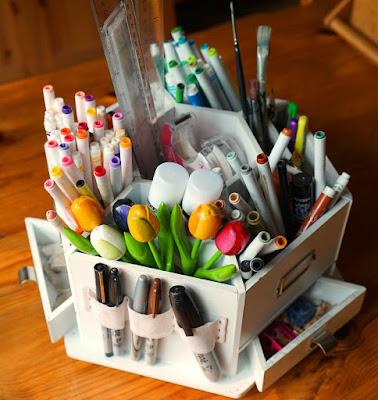
Storage: If you want to have a beautiful art corner, you still can, even if it's not colour-coordinated or tidy. A bunch of large bins and a very few smaller ones will do well, or similarly a chest of drawers. We do have a great art-storage carousel that has been in use in our house for many years, holding an assortment of whatever the currently-most-used supplies are. This makes a greater number of supplies more easily accessible to various people seated at a table, and a handy place to put them away quickly. But it's not essential. A bunch of materials rolling around the table can actually inspire new ideas.
Some kind of drying rack is a great idea. We never had space for one, but the end of our dining room table was usually used for drying. Still, if you have space, old oven racks or baking racks can be a great thing to have in your art area. A permanent set of wire-rack shelves is amazing.
Paper: It really doesn't matter what you have – just have some. Preferably lots. We commonly have whatever papers people have passed on to us, including old letterheads, those old perforated printer-papers, construction and manila papers, some old used sketchbooks that people threw away with 80% of their pages still unused, and various types of white and coloured printer papers. I also supply my kids with the seemingly endless supply of graph-paper which they love. No papers have specific intentions. It's OK with me if fancy sketchbook papers get used for note-taking or construction or torn-up little shreds of I-don't-know-what, or even crumpling into balls and called 'cat toys'. Getting the paper second-hand helps me let go of my own hang-ups about 'intended use' and 'value', which gives the kids a broader explorative environment, and greater learning opportunities.
Cardboard: You could go all out and have some gigantic boxes for construction experimentation (my kids have built cars, rocket-ships, stores and villages, and most recently, as teens, a vending machine which they took into public for entertainment). But at the very least you should have some old boxes or scraps around in case construction starts happening. I hope it does!
Cutting Devices: Good scissors, appropriately sized for the people using them. An exacto knife. Obviously not for young ones, but you might have one handy to help out with big cuts. And a serrated bread knife! This has been very helpful to us for cutting cardboard, especially. Also never underestimate the usefulness of a good hole-pucher, and things like skewers for poking holes in cardboard.
String, ribbon, and other tying materials: Especially for constructing with cardboard, but also comes in handy for making books and all manner of other things. You never know when this will be just the thing you need in the moment!
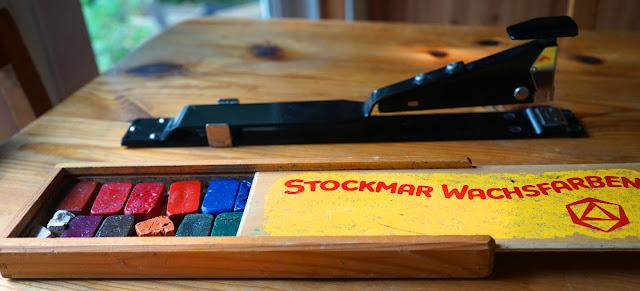
And take a look at this Stockmar box from my childhood. The box has been replenished piece by piece over the years, and the crayons have been chewed and used by multiple generations.
Mark-Making: It's important not to narrow our kids' ideas of what constitutes a proper mark. So much is lost to a narrow mind! So provide lots of different options, and let the kids mix them up. You might want to keep some expensive felt-pens out of the acrylics, just to keep them in working condition, but experimental mixing of media in general is a highly educational activity, so do it! You don't need all of these but at least have many.
- chisel-tipped pens – for older kids sharpies are awesome.
- a great assortment of colourful felt-pens. Those cute stubby pens are a huge waste of plastic, though, since they run out frustratingly quickly and have to be thrown away. Tip: Store felt and ink pens tip-down, which means they last longer before drying out.
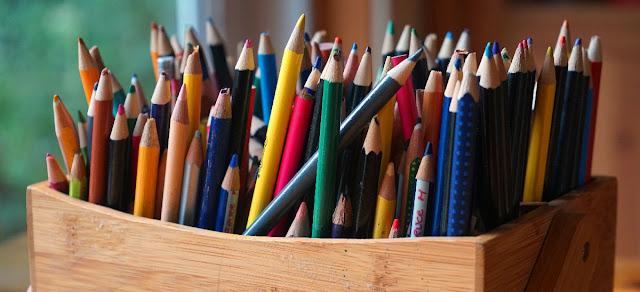
- pencil crayons (as they are worn down they make many different types of marks)
- wax crayons. Lots – and be prepared to see them very, very broken.
- those Stockmar beeswax block crayons I mentioned earlier.
- paint pucks that fit into a plastic tray – when you don't have time to get out the bottled paints, or just for watery experimentation, these are a wonderful thing to have available.
- bottles of tempera or acrylic paints that you can squirt out small amounts of for open-ended free painting (tempera is great for younger kids who might ingest it, but acrylic is great for the ability to paint on many surfaces).
- brushes! The best in my experience are natural stiff-bristle brushes, flat or chisel-shaped, because they give more opportunity for a variety of marks than round ones do, but others can be fun too.
- pencils, erasers, and fine black markers.
- something smudgy like chalk or oil pastels. Sidewalk chalk can be used inside and chalkboard chalk can be used outside.
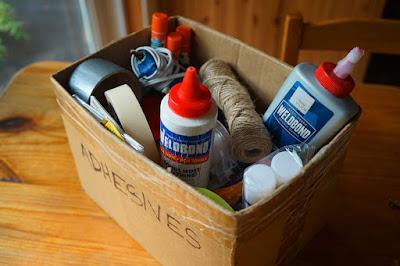
Glue sticks: Glue gets two sections because you need both. We always have a few glue sticks around, as they're the best way to stick papers together without soaking or wrinkling them. I recommend acid-free strong-hold glue-sticks. Don't bother with those silly school-glue types. They often don't hold.
White glue: While basic white glue will work for many applications, such as stiffening fabrics, gluing together cardboards, fabrics and layers of paper, we keep a bottle of Weldbond universal adhesive around because it glues almost everything! That's a great advantage when you're mixing up sometimes unexpected materials.
Fabric scraps and found materials: Without getting into the wonderful worlds of sewing and yarn arts, fabric itself is indispensable as an explorative material. With a bin of such materials for free creativity and exploration, you can create costumes, forts, decorations for those cardboard constructions, head-dresses, jewelry, dolls, doll-clothes, and really an endless list of delights. Have a bin of scrap fabric! And to this add found materials like plastic, corks, sticks, wires, etc. You never know what random things will be fabulous. Discarded CD's and cutlery for example. You just never know.
Something to squish and build with: A great block of clay and a big clay board to work on is awesome. That would be my favourite, although to be honest I didn't often have it on hand for my kids. We mostly used natural clay from the creek outside, and mud. Of course there are plenty of polymer clays available and while they're fun for building with, I don't personally like the environmental burden they bear (wanton use of plastics that end up in the garbage). I'm not really suggesting slime, either, because while slime-making and playing is a fine explorative activity, and fun, I think we get so much more mileage out of materials that stay put when shaped. A biodegradable glue mixed with sawdust or ground/shredded newspaper, by the way, is a pretty cool modelling material. So is salt dough, and gingerbread, if you want to eat your creation. One brand name product my kids did love and use for a long time was Stockmar modelling beeswax (no I'm not paid by Stockmar; they just make a few really fabulous products!).
***
So you see, the main thing is to have a fabulously free space and some stuff to play with there. Get messy. Play with the kids (or teens or adults!). They will learn a huge amount from watching what you do, so make sure you're exploring and have no idea what your outcome will be. This will help them learn to do the same, and together you'll make wonderful discoveries.
Originally published in August, 2018
My Residency in Amsterdam: Connection and Discovery and Stillness
Back in the 90's — my art school days in den Haag — I went over to Igor's flat just so he could give me some tapes he'd made. Good music to take home and feel. Igor Sevcuk walked himself to freedom from the war in Bosnia, leaving family and history and horrors behind. I think maybe we saw a similar brokenness in each other but we were utterly different. While my need to process my past makes me loud, Igor seems to live on a quiet, flat plain, processing and processing and processing. His mind and creations are full of contemplation. And out of this comes a kind of full-force storyline, like a chugging steam engine heading down the tracks, slowly but fast enough you can't let go. His art is captivating, and always leaves me wanting to understand. With his understated creativity he has been a recipient of the Prix de Rome, and he now runs the Goleb artist centre in Amsterdam with his equally fascinating, thoughtful, and generous partner, Go-Eun Im.
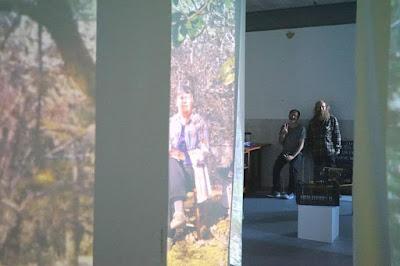
When I arrived for my residency at Igor and Go-Eun's art centre, I was amazed and delighted to discover that the whole of Project Goleb, which is housed in an old school building, echoed with the same quiet, tentative presence that I know of Igor. My husband and I settled into the residency studio and got to work with Igor, measuring and planning and talking. My usual work ethic is to quickly take stock of my situation, dig deep into my topic through interviews and endless mental planning, sketch up a working physical plan, and then work my butt off without any rest or break until I collapse. Not probably the healthiest way to work, and utterly opposed to the way things seem to go in Igor's world. To say it was a stretch for me to adapt to such an understated way of living and creating would be an understatement!! But it was clearly the modus operandi for all the artists working in the centre, so I had to change.
One day I spent over five hours walking and busing around Amsterdam with my husband (diligent, patient hero of an assistant), looking for the right fabric for the installation we were creating. The constant drone of the cars in the street, the relentless hammering of urban construction on a floodplain, the mill-like humming of people in the various markets we visited – it all felt so numbing and calming. Like a heavy blanket. Igor called my cell phone while we were out and I ducked into an insurance office so I could hear his gentle voice over the din of the street. The employees calmly but firmly pushed me off the premises as I strained to hear him, shuffling back out onto the street, hand cupped around the phone and my ear, the other waving apologetically. I began to feel like I was being bumped around like a stray dog in a crowd, hardly noticed but constantly on the move. I began to wonder if maybe the difference in energy between me and Igor is more a question of urban vs. rural living than anything else. But I got used to it.
We worked, visited, and experimented together and by the time the installation was up I could see my art had changed. Have I changed? The voices of people I had interviewed filled the room with a kind of encompassing drone. The sheets hung limply in the dark, and people who visited didn't laugh and play as they have in previous installations I've done. They stood still and contemplated. They stood among those sheets all quiet and wondering. Some told me later that they left with a feeling of thoughtful stillness. Still, in Dutch, means silent.
It's amazing to discover that I can change so easily, and to discover that I can still create, even in circumstances and emotional states that are new to me. Now that I'm home, I wonder if my work will change in general, or has it always been just a reflection of my surroundings at the time? Thank you, dear Igor, for your enormous contribution to art and humanity, for this residency and the time to spend getting to know you and Go-Eun. Thanks for opening more doors and eyes and hearts. May we continue to find connection.
Originally published in June, 2018
To the Guys Who Grabbed at my Crotch: Thank You!
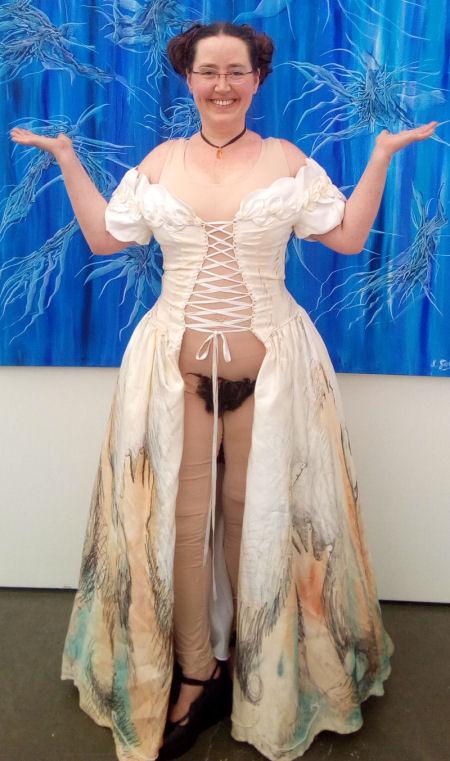
In May 2017 I was walking down an aisle of exhibitors at the Art! Vancouver gala, wearing an altered wedding gown from my (dis)robe series. All around the skirt, painted arms reach up from the floor to embrace, protect, or maybe pull the wearer down. That’s me, in this case: The wearer. It’s an open-fronted wedding dress, now that I’ve altered it, and I wore it with a nude body suit, including false pubic hair, made of a discarded brown wig. Women laughed as I walked along; a couple of them thanked me, without saying why. And one of these, who stopped me in my tracks with a desperate-looking smile and wide eyes, held me tightly by the arm and said, “thank you. Thank you for doing this. Thank you so much,” as her male companion leered at me, then squatted down close beside me and tugged at the false pubic hair, his face only inches from my crotch.
You know what I did? Nothing. Because really, it wasn’t all that unexpected. In fact, three different men reached down and handled my wigged crotch that evening. A multitude more said lude things to me. And I did nothing about it. Because they were making a point for me, and their wives were thanking me. Art is always a kind of sacrifice, and I’d rather be sacrificing myself this way, on stage on my own terms, than in the countless ways I do when I simply walk down the street looking female.
My work is intended to make people think about life – the way we live it, and the other people we share it with. Everything I create, whether a very personal abstract painting, an immersive landscape of people telling stories, or a provocative reclaimed wedding gown, is an effort to illuminate humanity so that we see each other and the places we inhabit in new light, with compassion, curiosity, and a feeling of belonging.
Originally posted in June 2017