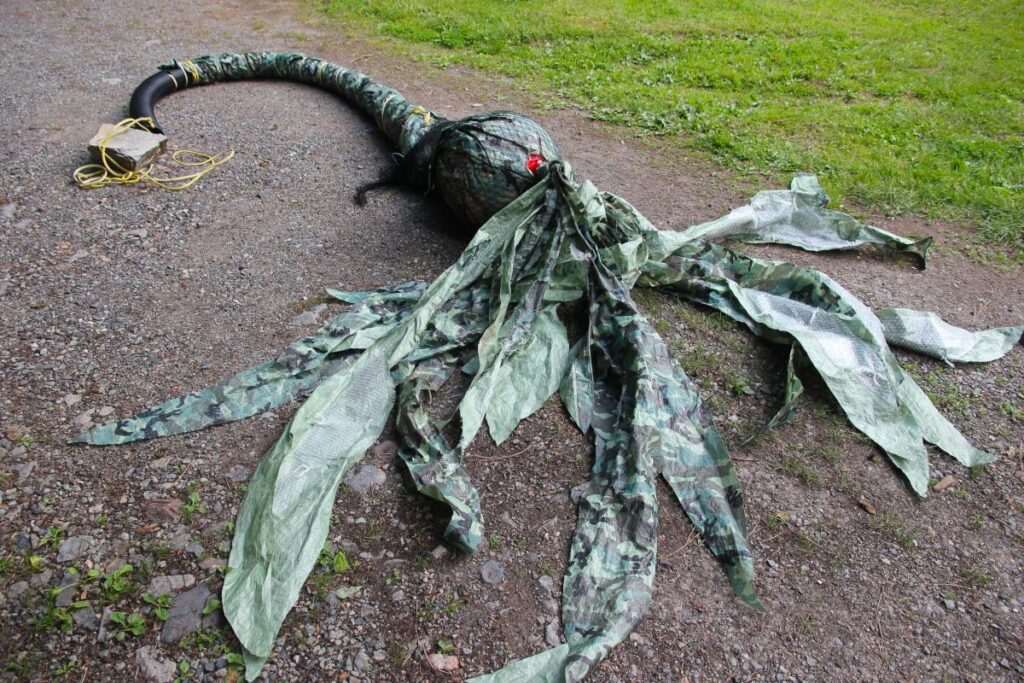
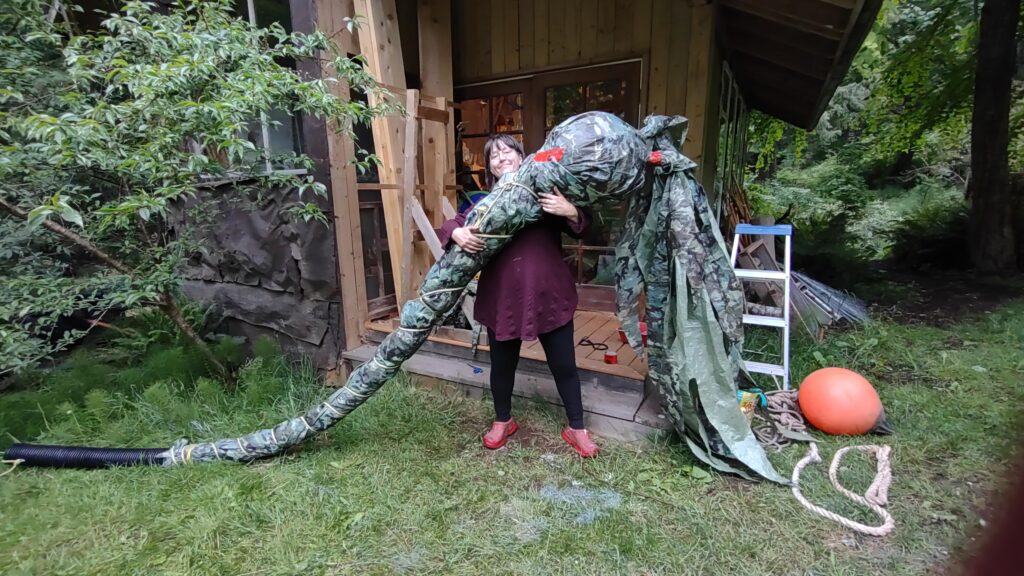
Átl'ḵa7tsem Promise, also affectionately called the garbage kelp, is a giant bull kelp made of garbage. It can float in water or lie on the beach.
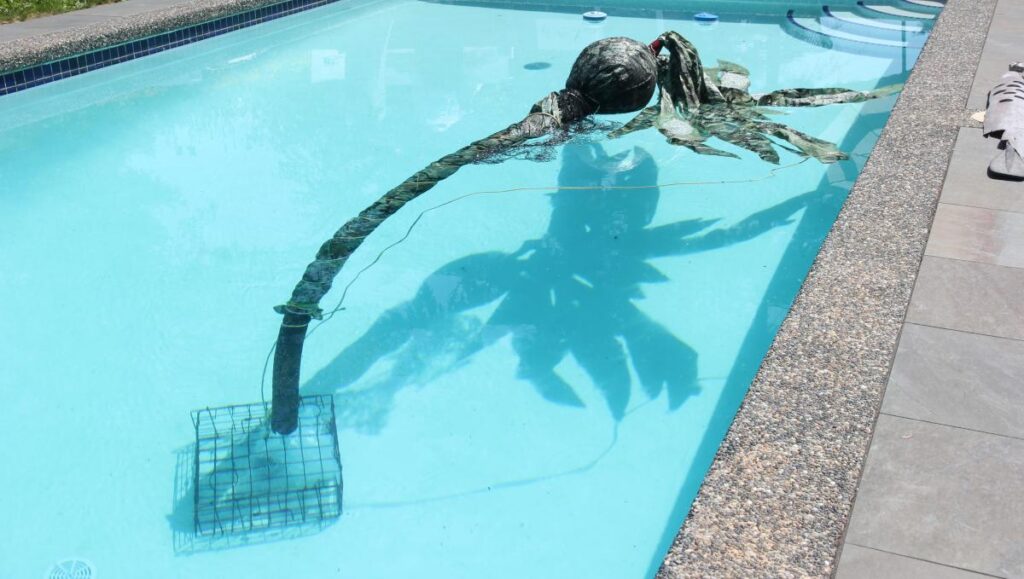
View a video including artist statement (audio) here:
https://makertube.net/w/cqquE2CWn6p9ddyaK9RTDY
When I was a child growing up on Ne⨱wléle⨱wm, we used to pick our way between the millions of oysters at low tide to find bull-kelp washed up on the shore and swing it around, wildly. We cut the bulbous tops off and dried them to make rattles filled with rocks. Some of us used kelp stems like wind instruments, blowing and howling into them, blowing bubbles into the water. At the time that water was filled with sewage and toxic effluent from the pulp mill, among other things, and it shone rainbows of diesel fuel, around the floating plastic, rope, buoys and fishnet. People carted away oysters by the car-full, and even after most of the oysters were gone, it never occurred to us that one day the kelp would be, too. My children grew up on the same island I did, but they did not know the smell of the pulp-mill, nor the abundant oysters and kelp.
What my children do know is forage-fish surveys, eel-grass rehabilitation and ocean-borne radiation tracking. They know more about the biodiversity of our home than I ever did. They know that the citizens of this area have been working hard to make amends for the ecological wrongs of the industry that was planted here. My children pulled up a melting sea-star in our crab-trap, and witnessed the subsequent disappearance of all the sea-stars as the wasting disease spread. Now they’re watching the sea-stars return; tiny, grey and clinging to the rocks where one day maybe kelp will grow again. Now my children are grown, and the whales have returned to Átl’ḵa7tsem – our home.
Over the course of my lifetime, this region has become a shell of itself, and then begun to recover, as we recognized and amended the wrongs we’ve done. Now we’re threatened by new industry, planted here by people who see this area as expendable in their constant search for more. But still more of us stand up for the ecology that belongs here. Still more of us can stand in the way of destruction. Still more of us can stand for the return to biodiversity that benefits us all, and create the world we need to thrive in. This starts with every single small choice we make: how much we consume, and where it comes from; what industries we support with our purchases and investments; what priorities we uphold as we move through each moment of our lives.
We can thrive here, if we recognize our place. We are part of the biodiversity of this area. That is the Átl’ḵa7tsem promise.