the astronomical, social and ecological landscape of the year
The goal here is to help us all visualize not only the passing of the seasons and our ecological surroundings, but also our connection with it. The wilderness is our home. It’s ALL of our home; the place our resources and food and prospects come from, and even that most important diversity—that interconnection that supports all life on the planet—including us. Markus got a bumper sticker for our car that said “save the humans”. Yeah. That’s where we’re at, now. And the humans includes ourselves and our children, and all the generations, thereafer.
We believe that the most basic necessity for saving ourselves is to connect with the ecology of our home. We need to notice the small changes in the seasons, in the plants and rocks and weather-patterns. We need to find comfort in the beautiful, dependable cycles of our sun, moon, and earth. After all, those cycles influence us directly in the form of tides, weather, and seasons. We’re a part of the ecology that depends on those things. This great diversity doesn’t need us to manage or control it, it just needs us to acknowledge our interdependency with it. It needs us to be in it. To BE it. When we notice our own footsteps, our own needs and our own impact in our ecosystem, we will be healthier, and so will it. Maybe we can save us.
This exhibition is a depiction of one solar year, and we hope that in laying the cycles of our ecology and humanity out to look at we can remind ourselves who we are and where we come from.
Thanks to Kathleen at the Hearth Gallery for interviewing us and creating this sweet video: https://www.youtube.com/watch?v=yIP669Zrg38.
Exhibition Description:
Emily van Lidth de Jeude and Markus Roemer turned the Hearth Gallery into a visualization of the year 2022! Now we're looking for more venues to create a similar experience, in a different year.
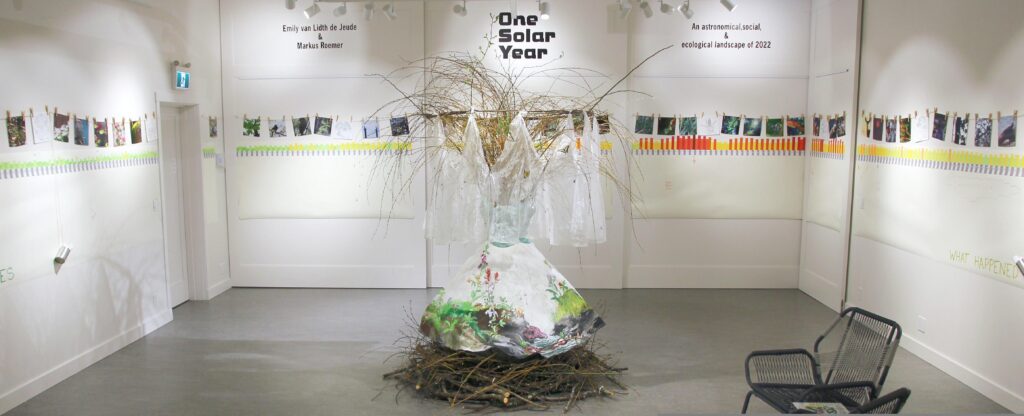
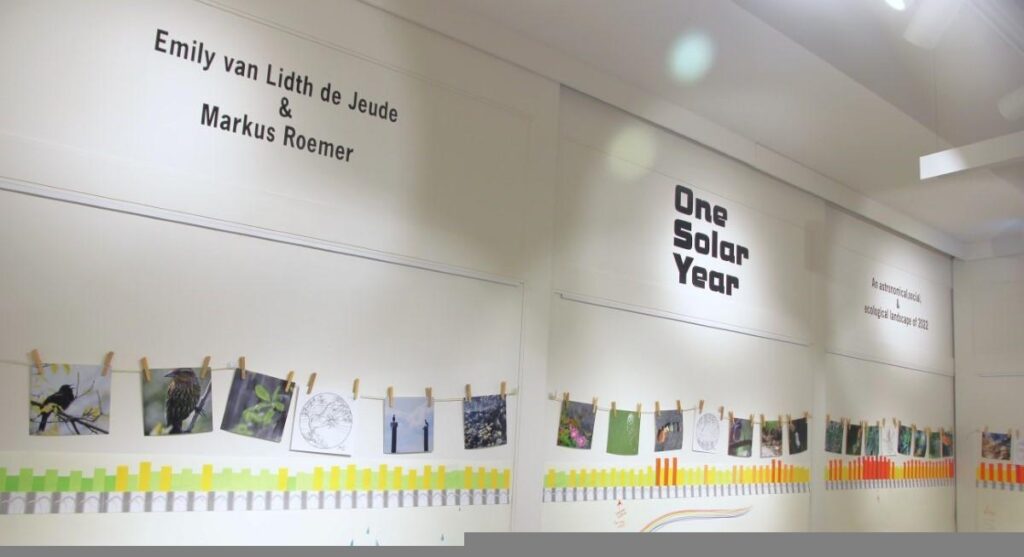
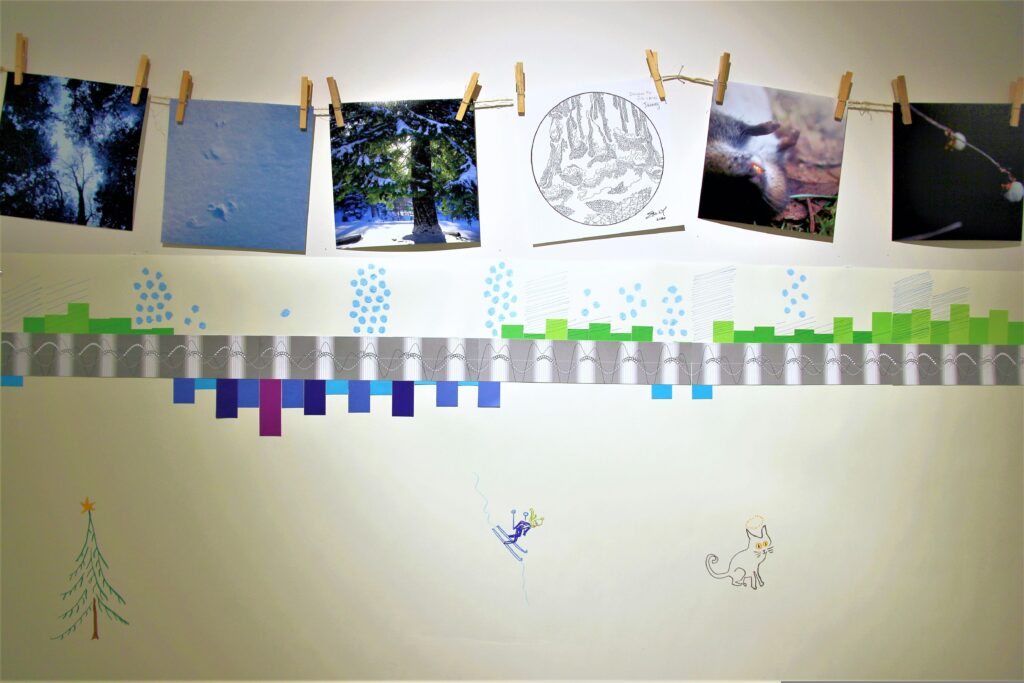
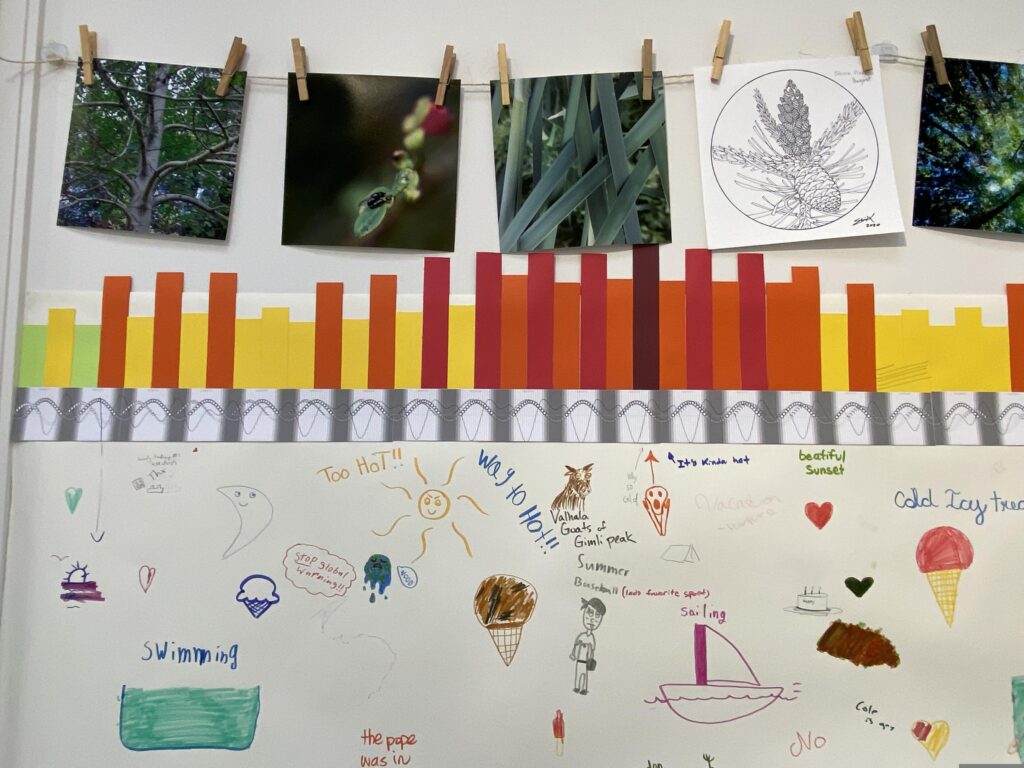
A Seasonal Cycles Graph is displayed around the gallery walls, creating a space where visitors can experience the cycles of earth, moon, tides, and seasons in a striking new way. Above this graph hang photos from our own ecology over the same time period. Imagine seeing photos of the cold and rainy spring we had right up above the graph that shows just how unseasonably cold that “Junuary” actually was, followed by that heat-wave we experienced, shortly afterwards. In colour and form, that's what One Solar Year offers.
The photos on the walls correspond with poems written also over the course of the same year, which explore the ecological and social events happening at that time. It’s a multi-layered approach to looking at “last year”, and visitors are invited to participate, by illustrating or writing about their experiences on the community mural that will also wrap around the walls of the gallery. This exhibition brings the community closer to each other and to our ecology, as our communal experience of the previous year is documented around us.
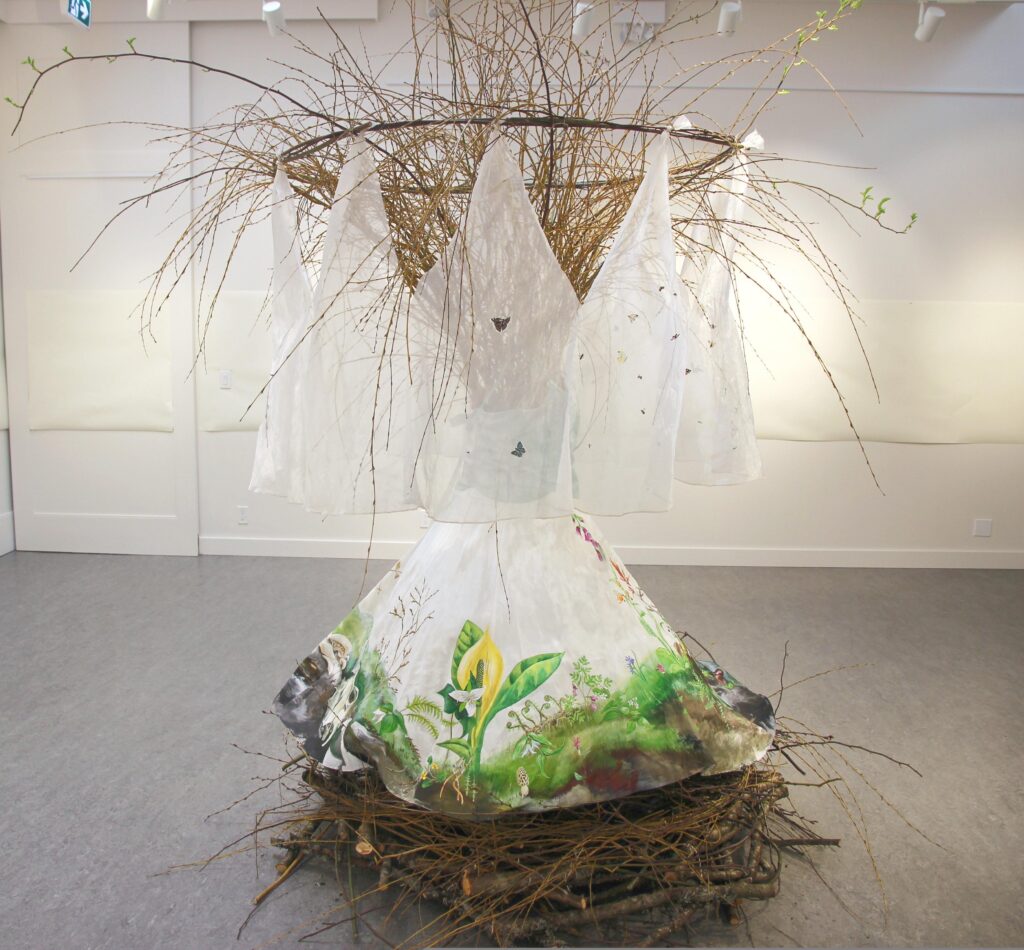
The centrepiece of the exhibition is a gown, reclaimed, altered and painted by Emily. The plants and invertebrates on the skirt and veil are shown in their seasons, counterclockwise, around the dress, and the branches that hold the headdress and veil leaf out during exhibition. From under the dress, a soundscape also cycles through the year, playing a two-hour-long sequence of seasonal bird and insect sounds, interrupted by the poems that Emily wrote over the course of 2022.
(dis)robe: Gaia Gown explores our human connection (and lack thereof) to the ecology of our home. What does it mean to wear the ecology of our home? And when it's displayed like this, how do we deify the wilderness while at the same time feeling ourselves to be above it? How are we, in fact, an integral part of it? How can we connect with the seasons as the plants, insects, and other animals do? Where do we find ourselves as humble and holy in the spectrum of our own ecologies?
See the Gaia Gown worn by Emily, here, along with one of the poems played from under the dress, during exhibition: https://makertube.net/w/rph8btiNYfi8TBHXbdWpWn
One aspect of the show is the series of photos and poems, which are also available in book-form, here: https://www.blurb.ca/b/11510497-one-solar-year